Wednesday, August 04, 2021
Researching craft as Christian witness
 I am researching whether Christians can witness through acts of making. Making celebrates the ordinary and domestic. Diversity is evident as different cultures make in different ways. Interest in handmade objects has risen in contemporary culture.
A first step was to research Christmas Angels. In 2014, two Methodist ministers in the North of England invited local churches to knit Christmas Angels. The Angels were tagged with a message of love and “yarn-bombed” in streets, train stations and schools. What began with a few churches knitting some 2870 angels in 2014, had by 2017, spread across Great Britain. Each angel was sent out with a Twitter hashtag #Xmasangels. Hence people who received the angels could respond online, using social media. Being a personal user of Twitter, I observed people tweeting their experiences of finding a Christmas angel. I was curious. Might people think a yarn-bombed angel was silly? Was this just Christians making a mess? This research became a journal article (“When ‘#xmasangels’ tweet: a Reception Study of Craftivism as Christian Witness,” Ecclesial Practices 7 (2), 2020, 143-62, (co-authored with Shannon Taylor).
A second step in the research was to learn to knit. I challenged myself to do more than think intellectually about my research. For this project, could I make my own Christmas angel? One of my children taught me to knit while my wife patiently untangled many a dropped stitch. I kept a diary of my experiences. In the joy of completing a row and the despair of splitting a stitch, I realised that research was not an elite mystery. Instead, it resulted from repeated practices: a habit, a way of being in the world. In researching craft, my understandings of research have been re-made. I wove these journal reflections into a chapter I was asked to write for a revised edition of Mary Moschella’s Ethnography as a Pastoral Practice (due out with SCM and Pilgrim Press in 2022).
A third step in the research is to listen to makers. Having researched those who received a Christmas Angel, I also want to understand more about the knitters. I want to interview knitters of Christmas Angels. I also want to interview knitters of scarves for the Common Grace Knit For Climate Action in Australia. I hope to form focus groups of knitters and explore why they participate and what meanings they make.
Hence Ordinary knitters: theologies of making research – If you are aged over 18 years and have been involved in a knitting project like Common Grace Knit For Climate Action or Christmas Angels (or something similar) and are willing to be interviewed about your experiences, I would love to hear from you. More information here or from Steve Taylor (kiwidrsteve@gmail.com)
Saturday, July 31, 2021
researching knitting in Christianity
Ethics approval this week for this research project –
seeking participants for research on knitting in Christianity. If you are aged over 18 years and have been involved in a knitting project like Common Grace Knit For Climate Action or Christmas Angels (or something similar) and are willing to be interviewed about your experiences, they would love to hear from you. More information here or from Steve Taylor (+64221552427 or kiwidrsteve@gmail.com)
Monday, July 26, 2021
Steve Taylor AngelWings
Rev Dr Steve Taylor is a public scholar working from Ōtepoti (Dunedin) for AngelWings Ltd in research consultancy, writing, teaching and speaking. He works with a wide range of individuals, organisations, church denominations and theological providers. Steve can be contacted at kiwidrsteve at gmail dot com.
Recent (2021) outputs have included:

Future Church Feasibility Study – in July 2021, a 52-page report, followed by a 7-page slimline edition and a spoken Board report, synthesising 56 voices from 10 cultures into 9 recommendations for a theological provider considering how to train future church leaders.

Te Ara Poutama Tuahahi – in August 2021, a co-design project, working in a bicultural team to conduct 40 interactions across three diverse ways of being, generating 125 pages summarising past gifts, present realities and possible greenshoots, in seeking to clarify ways to discern, plan and develop the future of theological education and ministry formation.
Learn local – funding from the Synod of Otago and Southland to initiate grassroots lay training, learning from site visits to local community mission projects, deepened through online education in the weeks following.
Ordinary knitters: theologies of making research – an international research project, interviewing knitters who contribute to shared social justice projects, seeking to understand motivations and meanings
Sunday, July 18, 2021
Psalms as builders of solidarity
Psalms are a prayer book. First the Jewish people, then down through the centuries in the Christian church, the Psalms have given voice to the full range of human emotion. There are happy Psalms, event Psalms, sad Psalms and angry Psalms. Psalms remind us that God is present in all of life; that no matter how we’re feeling, there are words that can give voice to all our emotions and feelings.

Photo by Shane Rounce on Unsplash
Psalms help us pray for ourselves. Psalms also help us pray for others. We can do this by reading a Psalm slowly, phrase by phrase, and by taking the time to let the words of the Psalm connect us with the experience of other people.
Let’s look at Psalm 107. First, verse 3, God has brought back from foreign countries. Now because of pandemic lockdowns, not many of us can say these words. Not many of us get to travel back from foreign countries. But there are plenty of people in our world this week who are travelling. So we use this Psalm to pray for travellers. We think of refugees and those looking after MIQ facilities. So the words of the Psalm help us build solidarity with the experience of other people, who are travelling even if we’re not.
Verse 4 Some wandered in the trackless desert. Again, I suspect that not many of us have got lost in the desert. But there are plenty of people impacted by the Tigray War in Ethiopia. Which includes reports of mass killings of civilians, and people forced to flee into the desert. So we use this Psalm to think of people in Ethiopia. So the words of the Psalm connect with the experience of other people, who are displaced by war even if we’re not.
Verse 10 Some were living in gloom and darkness, prisoners suffering. Again, I suspect that not many have been released from prison this week. But there were 649 people in NZ in 2020 who completed community work sentences and were freed into society. So we use this Psalm to think of New Zealanders who completed community work sentences. We pray these 649 people will be surrounded by good support structures in making good decisions.
Verse 17 Some were fools and there is suffering because of our actions. Again, I suspect not many of us are happy to stand and admit to each other that we’d been a fool and that people have suffered the consequences of our actions. But here in Dunedin we do have a problem with people running red lights. And there can be tragic consequences when we are foolish and break the road rules. So we use this Psalm to think about drivers. We pray that all drivers, no matter their age, will drive not foolishly, but wisely and in ways that don’t put other people’s lives at risk.
Verse 23, Some sailed. Again, I suspect that not many of us here this week have sailed the ocean in ships. But we do live just down the road from a major Port. So we use this Psalm to pray for every sailor in every ship that has birthed in our ports this week. We pray for protection for them, for good decisions during storms and safe return to their families.
So this is how Psalms help us think of others. They help build solidarity with migrants, refugees, those who suffer and those who sail. We do that by taking the time to let the words in the Psalm connect us with the experience of other people.
Sunday, July 11, 2021
Deliver us from evil: theological film review
Monthly I write a film review for Touchstone (the New Zealand Methodist magazine). Stretching back to 2005, some 160 plus films later, here is the review for July 2021.
Deliver us from evil
Reviewed by Steve Taylor
Lead us not into temptation, but deliver us from evil – The Lords Prayer
Evil is a terrible thing to watch. Deliver us from evil, made by Korean director, Hong Won-Chan, subtitled in English, is filmed across Japan, Thailand, and Korea’s cultural diversity and complex histories. Former Korean special agent Kim In-nam (Hwang Jung-min) accepts one last job to find a kidnapped nine-year-old. Arriving in Thailand, he finds himself followed by his past, including Ray (Lee Jung-jae), seeking revenge for the assassination of his twin brother. The result is a rapid spiral into violence, torture and revenge killing. Yui (Park Jung-min), a trans-female, provides humour as she is paid to guide and translate.
While watching evil is terrible, pretending sin does not exist is a travesty. Vulnerable children deserve to play in safety after school. Trafficking in children and organ harvesting must be exposed.
The presence of evil presents challenges; experientially, to those who suffer and intellectually, to claims of God as loving and powerful. It is tempting to consign ideas of sin and evil to a premodern universe. We might tap along to “Into my Arms”, joining Nick Cave (The Boatman’s Call (2011 Remastered Version)) in singing “I don’t believe in an interventionist God”. Yet, the atrocities humans commit, whether ancient or modern, require some form of intervention.
The Lord’s Prayer is another response. The well-worn words turn the Sermon on the Mount’s beaut attitudes into lived reality. The Prayer names the reality of sin. Evil is something to watch for. The words Jesus’ taught his disciples recognise the personal and the systemic, the individual lure of temptation and the malevolent power of unexplained systems.
Prayers require an answer. Deliver us from evil (the movie) provides two different responses to the tragedy that is human trafficking. In-nam leaves a trail of bodies. The value of sacrifice, mixed with the use of violence, has been one way of understanding Christianity. Substitutionary atonement, poorly applied, can turn Jesus’ body broken on the cross into some sort of Divine revenge killing for human sin. But violence, even if sacrificial, should have no place among those who pray the beaut attitudes.
Deliverance can also occur through random acts of kindness. Yui is delightful. Initially paid as a guide, she demonstrates a depth of love. Wide-eyed, out of her depth, her persistent presence becomes essential for the redemption of nine-year-old Yoo-min. Wide-eyed kindness is another way of understanding Jesus. In the somewhat foolish act of riding a donkey on Palm Sunday, the human temptation to follow a crowd and the presence of evil is exposed even in religious communities. Jesus’ actions, mixed with his persistence unto death on the cross, form a new community. Those who see evil find new ways to care for each other. Such can be the wide-eyed hope for all who dare to watch and pray for deliverance from evil.
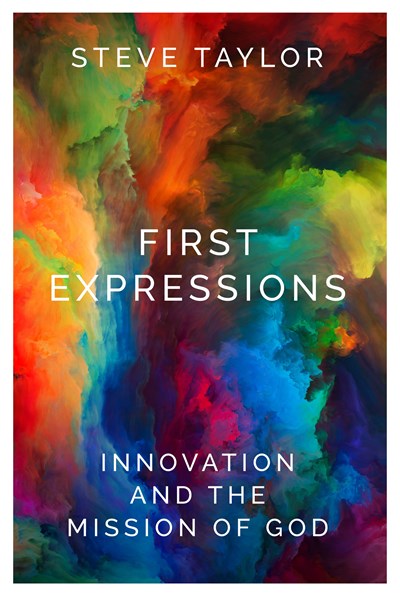
Rev Dr Steve Taylor is author of First Expressions (2019) and writes widely in theology and popular culture, including regularly at www.emergentkiwi.org.nz.
Sunday, June 20, 2021
raincoat prayers
The lectionary texts for Sunday included Mark 4:35-41 and Psalm 107:1-3; 23-32. Both texts introduce God as present and active in the storm. So in preparing for Sunday, folk were contacted during the week, asking them to bring a raincoat to church. This built a little bit of curiosity. During the sermon, I reflected on God as present during storms. I began with a story of when I was caught in a hailstorm, which enabled me to put on my raincoat, and so preach with my raincoat on. All helping to make the sermon more memorable.

As the sermon concluded, I invited a prayerful response, in relation to the raincoat that people had been invited to bring (while playing Tracey Chapman’s “I used to be a sailor,” from her Matters of the Heart album).
- You could use the prayerful time to think about your own journey of following God. What does it mean for you to keep adventuring with God – to keep saying yes to the storms of life? As a way of saying yes you could put on the raincoat you were asked to bring.
- Or you might use the raincoat to pray for someone you know who is going through a storm – perhaps a hard situation at work or a difficult relationship – that they would have the courage to keep finding the God of peace in the storm. Again, you could also put on the raincoat you were asked to bring, as a way of praying for them.
It was a tactile way to pray, first in the bringing into church of something from everyday life, second in the physical actions of putting on the raincoat, third in the memories that were created, which might well be recalled as the raincoat is used in the future.
Thursday, June 17, 2021
The First Cow: a theological film review
Monthly I write a film review for Touchstone (the New Zealand Methodist magazine). Stretching back to 2005, some 160 plus films later, here is the review for June 2021.
The First Cow
Reviewed by Steve Taylor
The First Cow is slow. Like cattle chewing cud, the movie rewards the patient viewer. Beautifully plotted by director Kelly Reichardt, the mix of humanity and humour offer an absorbing meditation on the nature of friendship.
The beginning tells the end. Up a river in the Pacific Northwest, a ship passes. It takes time and little changes. Up that same river, in centuries passed, trappers and traders have passed. Based on Half Life, a novel by Jonathan Raymond, The First Cow reveals the complexity of pioneer ambition.
The land is bountiful. Gold, beaver and the abundance of salmon offer opportunities aplenty. Amid such possibility, what to grow? Yet how to start? Because while dreams are free, getting ahead takes capital and class. Trade requires networks, more available to those already connected. New ventures take cash in advance, less risky for those who already have security.
Pioneer society is riven by class. English gentry has servants, while ships’ captains punish life with death. In contrast, Cookie Figowitz (John Magaro) is an orphan, learning to bake as an indentured labourer in Boston. King-Lu (Orion Lee) is Chinese, on the run from a charge of murder. Across cultures, Cookie and King-Lu form an unlikely friendship. They lack the cash, but as partners find themselves urging each other toward risk.
Oppressed by class, they offer each other trust and loyalty. In a sexualised society, a movie starring platonic friendship between two men, built on respect and partnership, is an oddity.
Theologically, The First Cow brings to mind Jesus’ invitation to friendship. God’s offer of friendship subverts hierarchies of servanthood. Trust, loyalty and mutuality are a radical way to relate to the divine. The cultural differences between Cooke and King-Lu remind us that relationships can be based on respect rather than sexual attraction or social media likes.
Historically, the Christian tradition has seen cultivating friendship as a spiritual discipline. Writing in the eleventh century (“Spiritual Friendship” in Ellen Charry, Inquiring After God: Classic and Contemporary Readings), Aelred, abbot of an English monastery, distinguished between the intimacy of friendship and that of sexuality. Aelred celebrated fun and sharing, arguing that we know God better as we share time, offer tact and draw on the strength of others. In the giving and receiving of life, dignity is possible.
For Aelred, friendship demanded time. Friends should be chosen carefully. Loyalty needs testing, as do intentions and discretion. Only once trust is tried will a friendship offer spiritual growth. For Aelred, such friendships, although few, will be lifelong.
Hence friendship defines the spiritual life. Indeed, greater love has no one than this: to lay down one’s life for one’s friends (John 15:13). This is a way to faith in which the love and loyalty of God on earth is clarified. It explains the slow burn of The First Cow, King-Lu’s final words, “I’ve got you,” and the movie’s beginning, which explains the side-by-side ending.
Rev Dr Steve Taylor is author of First Expressions (2019) and writes widely in theology and popular culture, including regularly at www.emergentkiwi.org.nz.
Monday, June 14, 2021
navigating leadership transitions in innovative communities
A few weeks ago, an email with a question – how to navigate changes in innovative communities?
navigating changes in first expressions from steve taylor on Vimeo.
A church pastor, who after reading my book First Expressions: Innovation and the Mission of God, asked if I could share some wisdom with their leadership team about navigating changes and transitions in innovative communities. The community were losing a key leader. New communities by nature have little experience of leadership transitions, so what wisdom could I share?
So I made a short video, reflecting on some of my own experiences (including my “have you grown” story). I also made a leadership transition bingo card, to reflect on innovation theologies and different church systems. I concluded with 3 tips drawn from research I did for First Expressions: Innovation and the Mission of God, lessons from 10 innovative communities I researched over an 11 year period
- storyforming
- flexibility
- situation awareness.
Resources – leadership transition bingo card

Thursday, June 03, 2021
journal article acceptance – Theologies of fulfilment in a reciprocal study

Stoked with news this week of journal article acceptance in International Bulletin on Mission Research. The journal is “an unparalleled source of information on the world church in mission. The editors are committed to maintaining the highest possible academic editorial standards.” I used to browse the journal as a wide-eyed undergraduate, never imagining I’d ever be a contributor.
My article will likely appear in pre-print later this year and in print 2023 – which suggests a pretty popular journal! This is the first academic output of the AngelWings season, written over the last few months, following presentation at the World Christianity virtual conference in early March and after reading Hirini Kaa’s Te Hāhi Mihinare | The Māori Anglican Church back in February in preparing Mission For a Change. At the same time, it began as part of lecture while I was Principal of KCML, and it’s really gratifying to have this sort of international benchmarking of my lecture content.
Theologies of fulfilment in a reciprocal study of relationships between John Laughton and Rua Kēnana in Aotearoa New Zealand
Abstract: The crossing of borders of religion presents challenges and provides opportunities. This paper presents a contextualized case study from Aotearoa New Zealand, examining the life-long relationship between Presbyterian missionary, Rev John “Hoani” Laughton (1891-1965), and Māori leader, Rua Kēnana (1969-1937). Photography, as a tool in discerning lived theologies, suggests a side-by-side relationship of reciprocity and particularity. Relationships across differences are revealed not in theory but lived practices of education, worship, and prayer, life, and death. The argument is that Kēnana and Laughton are enacting theologies of fulfilment, grounded in different epistemologies, one of matauranga Māori, the other of Enlightenment thinking.
Keywords: fulfillment theology, matauranga Māori, new religious movements, Presbyterian
Saturday, May 29, 2021
Reimagining Faith and Management book launch
 It was a lot of fun to be at the book launch of Reimagining Faith and Management: The Impact of Faith in the Workplace (Routledge, 2021) in Auckland on Tuesday. Big thanks to Auckland University of Technology for the hosting. It was wonderful to have packed house and the speeches of the Chancellor and Vice-chancellor, along with two cabinet ministers and the Race Relations Commissioner, to help launch the book. Congratulations to the editors – Professor Edwina Pio, Dr Tim Pratt and Dr Rob Kilpatrick.
The overwhelming theme, in all the speeches, was the need for ways to think about faith in management, given the importance of faith for so many people in our world today, and yet the silence of so much of the business literature about the place of faith in management. This point was made particularly well by MP Priyanca Radhakrishnan and MP Michael Wood, along with Meng Foon.
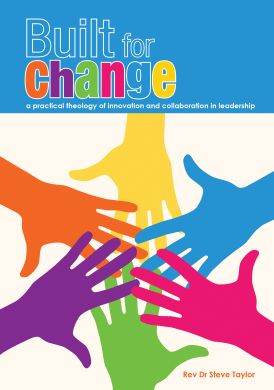
I was present because I have a chapter in the book, applying wisdom literature to the governance of innovation. My argument is that governing innovation requires different governance capacities and even more so in rapidly changing times. I used the wisdom literature – from First Testament and from Paul in Corinth – to outline 6 competencies, which are then grounded in two recent experiences of governing boards seeking to invest in innovation. The invitation to contribute allowed me to develop part of a chapter from First Expressions: Innovation and the Mission of God (2019) on governance as catholicity, and integrate with some of Built for change: A practical theology of innovation and collaboration (2016), for which I was glad.
At a personal level, to be invited to contribute to an international published volume was quite a thrill.
Sunday, May 23, 2021
“important data”: Emma Percy reviews my First Expressions book in Theology Today
“The book is a useful read for those engaged in Fresh Expressions and Pioneer ministry and those making decisions about what and how we support such initiatives.”
Emma Percy reviews my First Expressions: innovation and the mission of God in the latest edition of academic journal Theology 2021, 124 (3): 215-216. Theology as a journal considers itself the best journal available for students in ministerial formation, for theological educators and recent ordinands, as well as for laity and clergy keen to keep in touch with developments in Christian thought and practice. So it’s great to have the book reviewed!
Dr Emma Percy has research interests in feminist theology and ministry and is Chaplain and Welfare Dean, Trinity College, in Oxford. She affirms my research has generated important data and considers the book a useful read that is beginning a needed conversation, particularly when new initiatives are linked to financial grants. She considers my theological conversation partners (Janet Soskice and Julian of Norwich) are interesting and notes how I’ve chosen them because of the gendered nature of the formal Fresh Expressions movement of the Church of England. She affirms my questioning of the overvaluing of permanence in ecclesiology as “important” and requires further “nuanced theological reflection.”
She has some critical comments. First, she thinks the book has too many theological strands, with a need for greater coherence. Second, she wanted more engagement with the more critical voices in the debates around Fresh Expressions. Third, she ponders the reality that metaphors have limits. She considers how the birthing theologies I develop (from feminist theology) work given my data and how to understand the closure of first expression gatherings in relation to death of babies and infants. At the same time, metaphors have potential, which is clearly evident as Percy begins to work with my metaphors of craft and compost in seeking to think about the ecclesiology of first expressions.
Foregrounding some of his other metaphors from ecology or craft may have enabled him to play with the idea of things springing up and then being dug back into the ground or a faulty pot being remade into something new.
Finally, a conclusion, that the book is timely and important for the Church of England, particularly given current financial constraints. Thanks Dr Emma Percy, for a really thoughtful review, that helps me keep thinking, particularly about metaphors of craft and compost.
…….
This is the sixth substantive review of First Expressions: innovation and the mission of God. There have been five other reviews (that I’m aware of)
- here in Church Times;
- here in Ecclesial Futures;
- here in Practical Theology;
- here in Ecclesiology;
- here in Scottish Episcopal Institute Journal.
Monday, May 17, 2021
Easter in Art
Monthly I write a film review for Touchstone (the New Zealand Methodist magazine). Stretching back to 2005, some 160 plus films later, here is the review for May 2021.
Easter in Art
Reviewed by Steve Taylor
“That Jesus film,” said the cashier, somewhat suspiciously as we requested tickets to Easter in Art. Outside, a southerly drizzle left me pondering if the darkness of Good Friday included rain. Upstairs, the Dunedin architects’ gathered, their noisy networking loud enough to disturb the opening credits of Phil Grabsky’s Easter in Art.
“That Jesus film” is actually art history. Since 2009, director Phil Grabsky has brought art and artists to cinema screens across 61 countries. Easter in Art takes this art history approach to visual portrayals of the Jesus story.
Four different voices read the four gospel narratives. A soundtrack marks shifts in mood, from Palm Sunday’s courage, through the betrayals, love and suffering of Holy Week, to the redeeming surprise of Easter Sunday. Slow camera panning of art, from medieval to modern, is spliced with interviews with leading art historians. Easter, we are told, is the most illustrated story in the Western tradition.
Opening and closing scenes highlight how profoundly multi-sensory is the Christian faith. An Easter gathering, likely Orthodox, proclaims that Christ is risen. The words are surrounded by icons and incense. Candles illuminate statues, while bells and music invite listening and singing. Worship includes the bodily actions of walking in pilgrimage, standing to sing and making the signs of the cross. Sights, smells, sounds, touch and taste: all are engaged in the Jesus story.
The art history commentary clarifies the participatory nature of faith. Viewing art is not a spectator sport. Instead, Easter in Art outlines how art positions the viewer as a participant. Leonardo da Vinci’s The Last Supper adorned the refectory of the convent of Santa Maria delle Grazie. Refectory originates from the Latin word “to remake.” The actions of Jesus “remake” the everyday activities of eating with others. Ruben’s Descent from the Cross was created for an altar in Antwerp Cathedral. As the faithful gather, they are invited to imagine carrying in love the body of Christ. The Isenheim Altarpiece was first displayed in the Monastery of St. Anthony, which specialized in hospital work. The sick suffered not alone, but accompanied by “that suffering Jesus.”
The result is a checklist for preacher and hearers. Sermons and worship are for participants, not spectators. Seeing “that Jesus” can remake us, changing how we eat and act together. Hearing about “that Jesus” should connect with the human experience of courage, suffering, love, and redemption.
Next Easter, you could download the Easter story in Art (here). If you are preparing to preach, you could purchase John Drury’s Painting the Word: Christian Pictures and Their Meanings or Richard Harries’ The Passion in Art. If you want a global Jesus, ponder the twelve images in “Searching for a Jesus Who Looks More Like Me” (New York Times 10 April, 2020) or Rev Dr Wayne Te Kaawa’s “Jesus Christ meets Ihu Karaiti.” Each, in different ways, invite “that Jesus” to remake us, not as watchers but as participants in a global story of suffering, love, courage and redemption.
Rev Dr Steve Taylor is author of First Expressions (2019) and writes widely in areas of theology and popular culture, including regularly at www.emergentkiwi.org.nz.
Friday, May 14, 2021
Theologies of fulfillment in a reciprocal study of relationships: article submitted
A few months ago, I was glad to be part of the World Christianity Virtual Conference. Being virtual, it was a great way to connect with missiologists, without the expense and time of travel. The conference theme was the borders of religion and it seemed a good chance to offer some research I did – following the Christchurch mosque shootings – into how Presbyterians in Aotearoa interacted with difference, specifically the Ringatu faith.
I was delighted to have the opportunity to participate and very much enjoyed putting the presentation together – which I shared on a Sunday morning. It is pretty nerve wracking speaking online – and I was so nervous I forgot to turn my video on! Duh.
Anyhow, after the presentation, a journel editor reached out and expressed their appreciation of my paper and showed an interest in publication. I hadn’t made any plans for further publication, but having done the work, it seemed a good opportunity.
However, words written are different than words spoken. So I had to do some cultural checking regarding authorship, along with some copyright checking regarding photos. But again, the response from my tikanga (cultural) guide was warm, as was the National Library archivists. So after some editing and polishing, I submitted the article today – and now wait to see what happens through the academic review process.
Theologies of fulfillment in a reciprocal study of relationships between John Laughton and Rua Kēnana in Aotearoa New Zealand
Abstract: The crossing of borders of religion presents challenges and provides opportunities. This paper presents a contextualized case study from Aotearoa New Zealand, examining the life-long relationship between Presbyterian missionary, Rev John “Hoani” Laughton (1891-1965), and Māori leader, Rua Kēnana (1969-1937). Photography, as a tool in discerning lived theologies, suggests a side-by-side relationship of reciprocity and particularity. Relationships across differences are revealed not in theory but lived practices of education, worship, and prayer, life, and death. The argument is that Kēnana and Laughton are enacting theologies of fulfillment, grounded in different epistemologies, one of matauranga Māori, the other of Enlightenment thinking.
Keywords: fulfillment theology, matauranga Māori, new religious movements, Presbyterian
Thursday, May 13, 2021
Mission for a (Climate) Change with Christopher Douglas-Huriwai
Mission For A Change is a monthly resource showcasing recent research and new ideas. It offers 45 minutes of prayer, interview, Q and A and conversation about the “so what.” The aim is to provide short, sharp upgrades to learning.
In May the focus was Mission for a (Climate) Change and explored faith and tikanga with Rev Christopher Douglas-Huriwai.
“If I had no Māori blood .. You need to research where you’re from … and use whatever mountain is there, whatever loch is there and use that as your pepeha.”
“It’s not about you feeling connected. It’s the fact that you are connected … your ancestors once called that place home.”
“A theology of climate change, a theology of pepeha, is a theology of creation.”
Rev Christopher has written a chapter on pepeha and climate change, in the rich resource that is Words for a Dying World: Stories of Grief and Courage from the Global Church. Mission for a (Climate) Change excerpts from the interview with Rev Christopher are here. The interview includes Rev Christopher Douglas-Huriwai playing the taonga pūoro.

Mission for A Change runs monthly. Previous months have included
- In February, indigeneity and mission with Hirini Kaa
- In March, Gender, mission and reading Scripture for liberation with Rosemary Dewerse and Cathy Hine.
- Now, in May, mission and climate change, with with Rev Christopher here.
To register to receive further information, monthly zoom links and reading resources go here. For enquiries, contact Steve Taylor, Director AngelWings Ltd, by emailing: kiwidrsteve at gmail dot com.


 )
)