Sunday, April 14, 2019
Religious liberty and the curious case of Israel Folau
I write a column for Zadok, an Australian print publication, every quarter. It is a print based publication which they let me share on my blog, to resource more widely and generally. After recent events, my column for Winter 2018, seems strangely relevant.
Religious liberty and the curious case of Israel Folau
Steve Taylor
John Bunyan, Sarah* a Biblical studies scholar and Israel Folau meet in an English pub. Folau is carrying a folder. Marked secret, it contains back line moves for the upcoming rugby international at Twickenham. Bunyan is carrying an early draft of Pilgrim’s Progress, what will become one of the most significant works of religious English literature. Sarah is carrying a well-thumbed Greek New Testament and an article by Tuiloma Lina Samu, entitled ‘Dear Israel Folau – your unchristian comments hurt young, vulnerable Pasifika’.
Over a drink, lemonade for all, they share news.
John Bunyan shares his fate. He is about to be imprisoned for his religious beliefs, for preaching without permission from the established church.
Folau nods at the suggestion of religious persecution. He is also in trouble for expressing belief. It began with a post on social media a few days earlier about gay people being hell-bound unless they repent. Folau has an employer. That employer has corporate sponsors and they have called for inclusion. How does diversity and tolerance mesh with right to speak?
Does the Bible have an answer? Folau wonders.
Sarah opens her Bible and begins to share her research, which is analysing religious liberty in Biblical times. She points to Abraham, who recognises the divine names (El Elyon) used by indigenous people (Gen 14:18-20) and builds altars among already existing sacred trees (Gen 12:6-7; 13:18). Abrahams’ faith could live and yet recognise the liberty of other already existing beliefs. Then there is the book of Esther, in which God is never mentioned and yet faith is maintained by courageous individuals, including Esther, willing to marry a non-believer. So Christianity grows from people of faith living in diverse worlds.
The story of Esther and the mention of Haman’s gallows cast a shadow over Bunyan. Bunyan begins to name the friends he has lost, burnt at the stake. Their stories are told in the only book Bunyan will take with him to prison, Foxe’s Book of Martyrs. As a dissenter, Bunyan knows he will be denied a church burial. It is a future shame his family will bear, for when Bunyan, along with other well-known dissenting authors, like Daniel Defoe and William Blake, is buried outside the City of London, he is forever excluded from the embrace of the established church and civil society.
Folau shakes his head in disbelief. How does his social media experience compare with Bunyan’s eventual twelve years of imprisonment? Folau confesses he hasn’t read Daniel Defoe’s Robinson Crusoe. ‘But’, he grins, ‘I have heard Blake’s Jerusalem, ringing around Twickenham’ – a song silenced when Australia beat England at Twickenham in the 2015 Rugby World Cup. Bunyan, a rugby fanatic, feels the pain of what would be a 33-13 loss.
Sarah has a biblical question for Folau. In 1 Corinthians 6, a range of sins is mentioned. Why post about one sin, that of being gay, and not about theft or greed? What does Folau think of conservative New Testament scholars, like Gordon Fee and Ben Witherington, who stress that Paul is talking about behaviour, not orientation? And why focus on sin, when the verses that follow are about grace? 1 Corinthians 6 is a text marinated in grace and the joy of relationships restored. How can the grace of 1 Corinthians be communicated on social media? Sarah wonders.
Bunyan also has a question for Folau. He quotes Colossians 4:5: ‘Be wise in the way you act toward outsiders’. The letters of Paul and the New Testament are about the ‘constraints of context’ and the ‘amazing feat of ingenuity, improvisation, survival and creative living’ (Gorringe and Rowland). The early Church lived faith in situations in which their faith was a minority report and their beliefs were practised in everyday life rather than through seeking to change public law.
Folau picks up the newspaper and points out the headline: ‘Dear Israel Folau – your unchristian comments hurt young, vulnerable Pasifika’. He is aware of the high rates of suicide among Pacific Island youth, often linked to struggles over sexuality. Yet he still wants to be authentic, to share his faith.
Bunyan nods. Those are the very reasons he wrote Pilgrims Progress. To communicate his faith, he created a story. He jumped into an imaginary future, in which dissent does matter. It remains a vital Christian practice and an essential part of the flourishing of free societies. But the practice in Pilgrim’s Progress is focused internally, on the way that Pilgrim walked his journey. ‘Change yourself, and let your actions change the world’, Bunyan advises.
‘Closing time’, comes the call from behind the counter.
Last rounds make for last words. Sarah and John offer to pray for Folau: ‘God make your face shine upon your servant. Creator God, give words creative and wise toward all outsiders. Bless him and your church with the ingenuity to improvise in Australia today’.
‘And may England win’, Bunyan giggles.
* While there are many fine female Biblical studies postgraduate students who have studied at London Bible College, Sarah is a fictional figure. As is this encounter.
________________
The following items have been a resource:
Ben Witherington, Conflict and Community in Corinth: Socio-rhetorical Commentary on 1 and 2 Corinthians
Gordon Fee, The First Epistle to the Corinthians
Tim Gorringe and Christopher Rowland, ‘Practical Theology and the Common Good – Why the Bible is Essential,’ Practical Theology 9:2, 101-114.
Curtis Freeman, Undomesticated Dissent: Democracy and the Public Virtue of Religious Nonconformity
Tuesday, April 09, 2019
Feedback: unbounding theological education in the context of ministerial vocations
Friday I co-presented a research paper at the Sydney College of Divinity Learning and Teaching Theology Conference.
Graduate formation and life-long learning in the context of ministerial vocations
Proposal: That the theological college should partner with local church communities, unbounding learning to offer it in “communities of practice.”
Directly after the paper
- Can you give some examples of what it might look like to unbound theological education? (We had, so pointed to the two stories we had shared)
- What is the real issue? If the real issue is a crisis of faith in churches, then what role should theological education be expected to play?
- How would we assess our ‘graduate outcomes’? What type of processes could we use to ensure that unbounding theological education is forming people? (We pointed to the ways we are seeking to assess New Mission Seedlings over a 7 year period)
In further conversation over meals and coffee
- Do we have a business model? Have other theology providers tried what you are doing and can you learn from them?
- Being devils advocate – if you move theology toward the local church, might that dilute the quality of the education? What could be done to avoid the educational experience being “lowest common denominator ” shaped by a person who has not read or studied?
- We used a practical theology model as proposed by Mark Lau Branson. What we happen if we used the model by Richard Osmer in Practical Theology: An Introduction
? Osmer suggests four stages: describe – history – normative – strategic. In our presentation, we shared three stories to outline what this might look like, but it might be that using ‘strategic planning’ frameworks would be valuable if we had a governance board wanting to take a next step, wanting to unbound theological education more broadly across the church.
 ? Osmer suggests four stages: describe – history – normative – strategic. In our presentation, we shared three stories to outline what this might look like, but it might be that using ‘strategic planning’ frameworks would be valuable if we had a governance board wanting to take a next step, wanting to unbound theological education more broadly across the church.
Excellent questions, showing good engagement and helping us clarify work done and still needed.
We had arrived at the conference with a 2,000 word verbal presentation based on an already drafted 6,000 word journal article – in our back pocket, possibly ready to submit depending on feedback.
Our sense is that the above questions helpfully extend our work. They are important, yet they are practical – a strategic plan, assessment matrix, quality control, viable business plan. Rosemary and I discussed a next set of steps which involve
- submit the article we have drafted, pretty much as is
- develop the material further, with two purposes – a chapter for the conference book and a strategic plan presentation (if a governance group is interested). Development would include a different practical theology model (swapping Mark Lau Branson for Richard Osmer, Practical Theology: An Introduction
- These are two distinct pieces of work: drawing from the same data but are responding to the more practical interests of conference attendees, which are different from the journal article we are targetting.
So, all in all all, very useful exercise – forcing us to clarify two years of work, giving us generative feedback on next steps. Our thanks to Thornton Blair, who made it possible.
Wednesday, April 03, 2019
Graduate formation and life-long learning in the context of ministerial vocations
I’m in Sydney Thursday till Monday, co-presenting a research paper at the Sydney College of Divinity Learning & Teaching Theology Conference. I’m co-presenting with Rosemary Dewerse, on the results of the Thornton Blair Research Project. The project has already produced a range of outputs
- the Living Library,
- a Resourcing Ministers Day,
- 2 project reports,
- workshops in five Presbyteries
- presentations to KCML Advisory Board and Leadership sub-committtee
- two reports in SPANZ
- one journal article in Australian Journal of Mission Studies
- In addition, the Be Wise courses are under development.
It really has been an astonishingly productive piece of work (and could yet yield so much more fruit).
Alongside all this church facing output, the research might also be useful to other theological colleges wrestling with theological education in changing times. So in a spirit of sharing, Rosemary and I offered to present at the 2019 Learning & Teaching Theology Conference:
Graduate formation and life-long learning in the context of ministerial vocations
Proposal: That the theological college should partner with local church communities, unbounding learning to offer it in “communities of practice.”
For those keen, here is our two page handout – Graduate formation handout.
The trip to Sydney has been funded by the Thornton Blair Research Fund – which exists to encourage social science research in Christian education for ministerial formation – and we are both so grateful to that Fund for the vision and enthusiasm they have had for this project.
In preparing the talk over the last three weeks, Rosemary and I have ended up also writing a 6000 word journal article, which we hope to submit following feedback at the conference. One of the aims of my sabbatical leave is to complete some writing projects and as part of that, it has been great to spend some time reflecting on the Thornton Blair research, seeking to capture the learnings in words. It is important that as KCML seeks to respond to changing times, it does that based on deep listening and careful research – and the 230 Presbyterians that contributed to the Thornton Blair Research are certainly well worth listening to.
Tuesday, April 02, 2019
Praying in crisis: an empirical study of how local churches respond in gathered worship to local and international tragedy and trauma
After the Christchurch mosque attacks, there were many, many ways that people responded. One of them was to research, as part of action-reflection capacity building. So (the remarkable) Lynne Taylor and I initiated the following.

Email to Presbyterian and Baptist Churched — Research for an investigation on how churches responded to the Christchurch mosque terror attacks
The research explores how churches responded in their worship services to the recent mosque shootings in Christchurch. How do churches talk about tragic events? What do they do in response to such events in their worship services? For example, what and how do they pray? What resources do those leading the services draw on in deciding how to respond?
In doing so, the research explores best practice in this area of church pastoral ministry. It provides insight on church practice, as a resource for training of future leaders in theological reflection, congregational leading and worship leading and to assist with professional development of ministers and worship leaders.
All ministers and worship leaders are invited to participate. Depending on your responses, the questionnaire should take 5-10 minutes to complete.
It is a followup to work we did in November 2015 – Praying after Paris – which resulted in a presentation to Presbyterian ministers and another to chaplains at the Chaplaincy in Aotearoa New Zealand conference.
Using the same questions, but with new data from a differently tragic situation – will provide further action-reflection insights. Hence a joint paper proposal submitted last week for ANZATS 2019.
Praying in crisis: an empirical study of how local churches respond in gathered worship to local and international tragedy and trauma
Christian practices embody and reflect lived practical theologies. The gathered worship service is theory- and theology-laden, offering insight into Christian understandings of how God is engaged in human history and what human response could and should be. Investigating how Christians pray corporately is thus a potentially fruitful way to explore underlying theologies.
This paper draws on empirical research to investigate how local churches pray in response to trauma and tragedy. Online surveys were conducted in November 2015 (following coordinated terrorist attacks in Paris, along with bombings in Beirut and Baghdad) and in March 2019 (following the shootings at the Christchurch mosques). In the midst of trauma, how had churches prayed? Pastoral leaders in two New Zealand denominations (Presbyterian Church of Aotearoa NZ and Baptist Churches of NZ) were invited via email to participate in both phases of the research. General invitations to participate were also posted on social media.
In this paper, we consider the resources used by local churches and the theologies evident in their worship responses. The data will be read through the lens of Storm Swain’s understanding of God as earth-maker (holding); pain-bearer (suffering); and life-giver (transforming). How might these theologies interpret the data? Are different understandings of God present when events are local in contrast to events that are global? What of human responses to trauma of earth-making/holding; pain-bearing/suffering; and life-giving/transforming? The implications for those who pray in trauma and tragedy will be considered, with particular attention to the theological work possible through the practices of Christian public prayer.
Monday, April 01, 2019
Craftivism as a missiology of making
A conference proposal I have just submitted for the ANZATS 2019 conference in Auckland. It seeks to take forward the presentation I gave at the Transitional Cathedral last year (a summary of which was included in Cathedral Extra here).

Where #christmasangels tread: Craftivism as a missiology of making
Craft-ivism combines craft and activism. Craft-ivists utilise needlework, including yarn-bombing, cross-stitch and pink pussy hats, in collective acts of protest and solidarity (Knitting for Good!: A Guide to Creating Personal, Social, and Political Change Stitch by Stitch
Given that many Christmas angels included a twitter hashtag, technology can be utilised to access empirical data (Creative Research Methods in the Social Sciences: A Practical Guide
Christine Dutton argues that acts of making are spiritual practices that can be formative in the making of new forms of Christian community. This suggests that practices of craft-ivism can be read theologically. Hence, a Christology of making will be developed, reading Proverbs 22:2 “the Lord is the maker” in dialogue with David Kelsey’s theological anthropology (Eccentric Existence: A Theological Anthropology (2-Volume Set)
(Photo by Michael Mroczek on Unsplash)
Wednesday, March 13, 2019
The week day church as a hermeneutic of the gospel: an action research project integrating faith and work in a local church
A book chapter proposal for a proposed special journal edition on ‘Mission, Faith, Work and Economics.’ I wasn’t expecting to write this on sabbatical, but last week I found 900 words of notes and resources from a workshop I led last year.
The week day church as a hermeneutic of the gospel: an action research project integrating faith and work in a local church
A distinctive feature of Christian spirituality is the commitment to sacralise the secular. Martin Luther asserted that “household chores are more to be valued than all the works of monks and nuns” (Christian History: An Introduction
This chapter will outline an action research project, that of my own participation in leading one local church in the integration of faith and work. Intentional actions wil be described, along with documentary analysis of liturgical innovation.
Three areas of ecclesial life will be examined. First, liturgy, including sermons, creative Eucharist, monthly work-place pastoral prayers and engagement with a secular festival (Labour Day). Second, small group practices of discernment and action-reflection. Third, mission structures, in the form of annual commissioning days and the development of mission collectives to encourage integration of faith and work.
The data will be examined in light of Lesslie Newbigin’s claim that the re-missioning of Western cultures requires the congregation to be a hermeneutic of the gospel, “men and women who believe it and live by it” (The Gospel in a Pluralist Society
The argument is that action-research in local church can sacralise the secular as it provides contextual resources that invigorate mission as faith-ful work witness.
Monday, March 04, 2019
structuring outside study leave
When the Presbyterian Church formed KCML in 2006, the goals for the College included research. KCML is to be responsive to trends and training needs and to foster and facilitate high quality research into these needs and trends. It makes sense, in a time of rapid change, to create capacity for action-reflection on ministry and mission. Such reflection, especially if it is to be high quality, takes time and so to embody the tasks assigned by the church, KCML Faculty are allocated outside study leave, 15 weeks every 3 years.
I was due October 2018, but delayed mine – what with other Faculty already on study leave and to ensure teaching over Spring and Summer block courses. However as of today, I have 13 weeks to engage in high quality research. Over the last few weekends, I’ve been setting up an office at home, making a writing space, printing the various chapter drafts to date and bringing home books I might need.

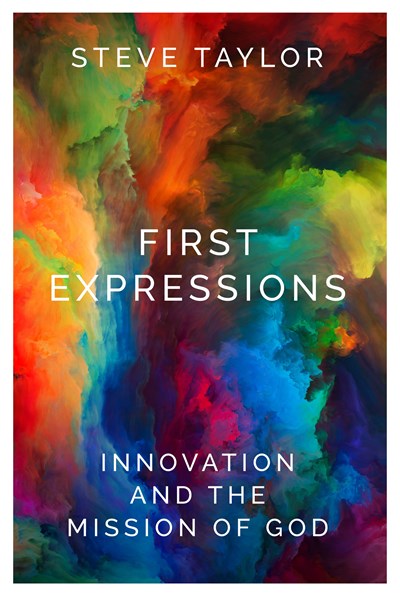
Given a need and a trend within the church involves new forms of church, the focus of much of my research will be on sustainability and innovation. In order to make sure the research is accessible to the church, I have signed a book contract with SCM Press. The provisional title is First Expressions: emerging movements in mission and the contracted publisher is SCM. It will bring my action over 25 years – planting a fresh expression, leading a church that planted fresh expressions, developing a “have-a-go” pioneering qualification at UCLT, developing New Mission Seedlings here at KCML, into conversation with theory on mission and innovation. In order to keep it give it a wider “action” frame than my own experiences, it will draw on my longitudinal research on new forms of church ten years on in the United Kingdom. I’m particularly interested in what we learn from those who try/play/experiment and how we theorise the tension between durability in cultures of continuity and fail fast in cultures of discontinuity.
Connecting with SCM was a delightfully random part of last year. I had been keen to pitch them the book project but had lacked the time to polish up a proposal. However, when the editor heard I was going to be in Scotland last year, doing a bit of teaching for the Church of Scotland, he asked to connect. I said that actually, well, I had been wondering about showing them a book proposal and if I gave it a quick polish, could I send it before we met … and the rest is history. It feels so good going into a sabbatical with a specific project, with 10 distinct chapters already in draft form, with chapter summaries of each to give me focus.

To help me write, I need structure. I also know it is not healthy for me to write all day. So I have allocated other activities to break up my days. So each day is divided into five parts.
- create – two golden hours of writing – picking up on the research around the value of 2 golden hours
- make – some tactile engagement with the wider world, in particular craft and the Bible
- complete – to help motivate during a major project, there are a range of smaller, almost complete projects – rejected journal articles from last year to try in another journal, a couple of spoken lectures to turn into a publication
- deepen – reading and research, including in the wonderful Hocken, which I find a wonderful re-creative space
- connect – time to attend to email, rock up to random lectures, blog, administer
I’ve even made time sheets to help me keep track of progress.
Finally, there are the carrots. If I meet the mid-May deadline, I hope to have a few weeks to hikoi with Te Aka Puaho and the whanau of Wiremu Tamehana communities or perhaps go walkabout to visit Aunty Denise Champion in Port Augusta, Australia, and complete with her a joint journal article we began a few years ago.
I can adjust the schedule as I go, or if I fall behind. But it is a start, a way of enabling me to step through the gift that is the space to be responsive to trends and training needs and to foster and facilitate high quality research into these needs and trends.
Friday, March 01, 2019
For this Sabbath time

For this Sabbath time
A stroll in life’s light
Illuminated in silence
Divine with human
In steps
Of writing
First expressions
Tracing the light in dark of community, institution, structure
A path
Hewn in love
God’s marks of mission
Tihei mauri ora
-Now read again, from bottom to top
Friday, February 22, 2019
Redeeming a Past: An Ancestor Perspective
 It is a great privilege to be part of the launch, and a contributor, to Listening to the People of the Land: Christianity, Colonisation and the Path to Redemption, edited by Susan Healy.
Susan contacted me in April 2018, asking if I could contribute some words. I had a range of deadlines looming, but I also had been doing some thinking about colonisation in light of the challenges of post-colonial literature. How do we tell stories in which the primary actors are not the colonisers? In the words of a wise kuia, Aunty Millie Te Kawa of Tūwharetoa: “Everyone talks about the famous missionary who worked among my people. But who taught the missionary the language?”
So over a number of months, with great patience from Susan, I wove together some thinking, scattered a range of different pieces I was working on. My chapter is titled: Redeeming a Past: An Ancestor Perspective
Thursday, February 14, 2019
Children of the waters journal article
Children of the waters: whirlpools, waiora, baptism and missio Dei
Keywords: Missio Dei, baptism, indigenous, Māori, early Christian art, environment
Abstract: From space, the Pacific glitters in ocean blue. What might the world’s largest ocean contribute to missio Dei? A spiral methodology is used to trace connections between the baptism of Jesus, early Christian art, recent legal (Treaty of Waitangi Tribunal) research and indigenous knowing, including ocean voyaging, ancestor understandings of whirlpools, Māori water rites and oral history of river beings (taniwha).
The argument is that indigenous Oceanic (Māori) understandings of water, in conversation with baptismal narratives, present missio Dei as an immersion in God. Mission is located not in the activity of the church – and hence mission expansion as part of European colonisation – but in the being and becoming of God. Creation and redemption are interconnected and an environmental ethic is expected. Children of the waters (ngā tamariki o te Moana nui a Kiwa) listen to creation’s voice (taniwha speaking) and act for the life (waiora) of water.
Tuesday, February 12, 2019
Decolonising the (theological) curriculum through place- based pedagogies

After teaching Theological Reflection on Saturday – on place-based methodologies – I spent some time reflecting on the experience. It was shaping up to be a hot afternoon, so in the morning I worked up a new activity, inviting the class to walk the local botanical gardens in order to break up a 3.5 hour lecture slot. It began out of compassion, but as I reflected, there were some interesting learnings happening. A potential reflective-practice journal article abstract began to take shape
Decolonising the (theological) curriculum through place- based pedagogies
A Theology of Place from :redux on Vimeo.
How to teach place-based theologies to those who might feel shallow-rooted? My practice-based research sought to investigate place-based teaching in the context of theological education among those being formed for the vocation of ordained ministry. I sought to decolonise the curriculum, introducing indigenous theologians, who document the way that identity is formed through generations of relationships connected to place. Richard Twist (Rescuing the Gospel from the Cowboys: A Native American Expression of the Jesus Way
The challenge was that the cohort was not indigenous. As migrants, or descendants of migrants, experiences of a sense of relationship to place can be limited. In addition, the class was experiencing dislocation, gathered from various national locations into a context not familiar to participants.
The space between indigenous knowing and migrant experience was presented as an opportunity. The writing of Alifeti Ngahe (Weaving, Networking and Taking Flight) was instructive, providing vocational examples of how he migrated into new communities and developed place-based theologies. Students were invited to locate themselves as “other” and in that epistemic rupture (Rosemary Dewerse, Breaking Calabashes) find a posture of investigative curiosity. The class was sent in groups to examine statues in a local Botanical Park. They were provided with a short history of various monuments and instructed to see if they could do what Alifeti had done, make theological connections with place.
Each group reported a range of insights. Work was then done as a cohort to shape the insights into prayers of approach for use in the context of vocational ministry. The liturgical movements of thanksgiving, confession and lament provide room to examine a range of important movements in the journey of decolonisation. This enriched the place-based reflection and provided vocational application.
The argument is that practice-based pedagogies inform the practise of place-based ministries. Outdoor experiences, paying attention to local monuments, naming epistemic rupture and listening to indigenous theologians provide important resources in place-based teaching.
Sunday, February 03, 2019
theological reflection as integrating the journey’s of life
An introduction to theological reflection. A 3 hour class to begin a learning community, orientate interns and introduce assessment. In preparing the class, I had 7 different definitions of theological reflection. I decided to lie these down the hallway leading into the lecture space.

This meant that we began the class not in the room, but in the hallway. I introduced myself and noted that we would all be bringing our stories, our life experiences, our learning to date, into the class. The task of theological reflection was to work with our lived reality. As interns, we were preparing for ministry and that meant that all those we ministered to would also be bringing their stories, their life experiences, their learning to date, into our churches.

I invited the interns to walk slowly down the hallway, to take their time and engage each definition. In a few minutes, we would choose the one we liked the most and the one we disliked the most. This generated good discussion. People signed their names to various definitions, owning their understandings of theological reflection that they brought into the room.
But the Presbyterian Church of Aotearoa New Zealand is a diverse church culturally. It has a covenant relationship with the Maori Synod, Te Aka Puaho. So out of respect for that relationship, I showed a 4 minute video clip, an introduction to the tukutuku panels that adorn the front of Whakatane Maori Presbyterian Church. We glimpsed a very different approach to theological reflection, one expressed through art, that worked with tradition and culture in new and different ways.
And so I invited the class to return to where we began. To walk back out of the classroom and into the hallway. To slowly walk back in, past each of the definitions of theological reflection. And to ask themselves
which definition of theological reflection best sums up this example of indigenous theological reflection?
The students returned with very different definitions. One definition that initially was disliked the most was suddenly liked the most. A definition that made no sense suddenly was clear. It was an illuminating moment as we realised afresh that what we bring – culturally – shapes our theological reflection
An excellent beginning to theological reflection.
Friday, January 25, 2019
the burning bush and cultural transmission
Today I spoke at the Otago Museum, giving a conference paper (abstract here) at the Held in Trust: Curiosity of Things symposium. My “thing” was the burning bush (an image central to Presbyterian church identity) as it has been crafted and crossed cultures from Hemispheres to Aotearoa New Zealand.
 My talk drew on some different pieces of my thinking/talking/researching over the last few years
- block course intern teaching on the Bible in Presbyterian identity (in June 2017)
- introducing New Zealand Presbyterians to Scottish Presbyterians (in June 2018)
- keynote at Connect18 on burning bush as basis for a Presbyterian theology of mission (in July 2018)
- guest speaker at Knox Church AGM (in October 2018)
It was rewarding to take previous work already presented in a range of contexts and find ways to weave it together and offer it in an academic context. It was great to take the rich resources of the Presbyterian Research Centre into a museum setting and to have their support (shout out) during my presentation.
In developing the paper and thinking about the transmission of identity as belief across cultures, a key conversation partner was Webb Keane, Christian Moderns (The Anthropology of Christianity)
Anthropologist Webb Keane studied transmission of Christianity in Indonesia – over 100 years from Dutch colonisation to post-independence. As part of his research, he did an object study of a Sumbanese house as a paradigm of cultural ordering. He argued that when text is detached from objects, new aspects of the object come to the fore. The result can be “different representational economies” and different modes of objectifying” (Christian Moderns
, 269).
Which seems to be is what is happening with the burning bush. The Presbyterians brought words: many words in the Books of order and Westminister Confessions. They also brought a symbol. An object – a thing – which could be re-presented; as craft and taken across cultures in the complexity of communication. As text and object are detached, new aspects come to the fore and multiple “representational economies” come to play.
This highlights the essential role of local agency in global exchange. In the glowing vine of Te Aka Puaho and the stained glass windows of St Johns Papatoetoe, a Scottish symbol has been re-framed. It is being interpreted through different Biblical narratives – Christological for Te Aka Puaho, creation-centred Moana voyages at St Johns Papatoetoe. Burning bushes can be frangipani: Sinai wilderness can be oceans in which “I am is revealed.”
Local agency opens the doors for objects to be become subverting symbols. Imaginations can be re-narrated and fresh currents in theological production become possible.”
Thanks to the conference organisers for having me, to the Presbyterian Archives and staff for being so helpful and to Otago Museum and University of Otago Centre for Colonial Research for being such generous hosts.
Thursday, January 17, 2019
a learning community devotion as the year begins
One of the Gospel readings for this week is Mark 1:14-20 and includes the story of Jesus calling Simon, Andrew, James and John to a learning community, sharing a journey of growing together.
Since this is a text about the beginning of something, it invites us (as KCML Faculty) as we begin the year, to consider our experiences of being called, those moments in life when we sensed that God was looking at us, communicating with us, inviting us.
As we hear the text read aloud, I invite you to reflect on those moments.
- where (geographically) where you “found”? (In the text, it is by the Sea of Galillee (1:16). Where was it for you?)
- what was your “work”? (In the text, it was fishing (1:16) and net mending (1:19). What where you doing when you were called?)
- what were your “fathers and hired hands” thinking? (In the text, they left their father Zebedee and the hired men (1:20). It might be an imaginative exercise, but who was watching you? What were they thinking as you set out to follow your call?)
(Let’s share these together as a team).
These three questions are carefully chosen. They are designed to locate us. First in place, in specific geographic locations. Second in our stories, the specific skills and abilities that we were honing. Third, they are social questions. They locate us in families and in cultures. They invite us to consider our genealogy, the role of ancestors (“they left father Zebedee” 1:20).
I offer this reading and these three questions for a number of reasons.
First, as the year begins, motivation can be hard. If you are like me, you might rather be on holiday, enjoying a beach, a second cup of tea at a slower pace in order to choose whether to look forward to the pleasure of a day with a book in the shade or walk the bush or book that catchup with friends. This text re-calls me, reminds me of the grace and challenge of call.
Second, to remind ourselves of who we are as a team. When we were first called geographically none of us probably imagined that we would be here at Knox Centre for Ministry and Leadership, serving in this way. We bring this past, our specific geographic locations, our past skills and abilities and competencies, our families and cultures. They make us who we are and we work alongside each other as humans, with these shaping experiences. We work with each other, each of us having experienced grace and challenge.
Third, we as KCML are about to welcome a new cohort of interns. Each of them will have a specific past, have been formed by specific geographies, bring prior skills and abilities and competencies, be located in families and cultures. Each of them has experienced, like us, grace of call. Each of them, like us, has said yes to the cost of discipleship. This is our privilege, as Faculty, to be working with these courageous and graced individuals.
As we begin the year, as we consider our blockcourse and the work before us, let’s pray.


 )
)