Thursday, July 12, 2018
Understanding conversion in light of the “Silence” of religious change
Some writing I’ve been doing over the last few days. I’m trying to knit together a conference paper delivered in August 2016 and a conference paper delivered in March, 2017, for a potential book chapter due mid-July 2018!
Both conference papers stand at around 2,000 words. Together, could the two pieces, make a whole, a chapter for a potential book publication? This will require one central idea and some clear editing. That begins with an introduction. So, can I find an introduction ….
Jesus comes announcing the Kingdom of God is near (Mark 1:15; Luke 10:9). This invites the possibility of conversion. Hence the relationship between conversion and Christian witness becomes an essential area of study for missiology.
The documents of the early church offer narratives in which the proclamation of the Good News is linked with life change and transformation. In Acts 2:41-47, three thousand experience a transformation into a church which practices a passionate spirituality, experiences the supernatural and outworks a radical egalitarianism. The book of Acts chronicles the expansion of Christianity, geographically from Jerusalem to Rome; ethnically, from Jews to Gentiles; numerically across the cities of the Roman empire. Soards argues that the speeches in Acts, of which he identifies thirty-six, are key to the unity and emphasis of Acts. In words, they present “the story of the early church’s bearing witness to God’s will and work in Jesus Christ.” (The Speeches in Acts: Their Content, Context, and Concerns
, by Marion L. Soards. Louisville: Westminster/John Knox, 194). The relationship between Christian mission, conversion and expansion continue through the history of the church. Individuals stand in church to testify to finding faith in Christ and the transformations that result from conversion. Mission agencies draw on accounts of conversion in seeking prayer and financial support. In each case, the assumption is that conversion and transformation are intrinsically linked to Christian mission.
Equally, the historical record, in both Josephus and the Christian Gospels, is that Jesus’ announcing of the Kingdom was met with both receptivity and resistance (Luke 9:51-55). Essential to a non-coercive invitation is the freedom for conversion and transformation to be resisted. The theological challenges that result must be considered in constructing a missiology that is equal parts robust and realistic. Indeed, amidst the expansive narratives of Acts, is the reality that individuals resist the Gospel. It is easy to celebrate the thousands in Acts 2 and 4, but in many of the cities in which the Apostle Paul preaches, there is a refusal to convert and resistance to the transforming announcement of Good news of Christ. Hence study of the nature and dynamics of Christian witness must, in the search for truth, engage with the realities associated with resistance to conversion.
A robust and realistic missiology must include not only the possibilities that surround a lack of conversion. It must also examine the human desire to deconvert. In 2014, in the United Kingdom, National Secular Society supporter John Hunt made headlines when he sought to be “debaptised.”. Adams reports that over 100,000 Certificates of De-baptism were downloaded in five years from 2004 to 2009. While uncomfortable, it is an area that any study of conversion must consider. Who is God and how might conversion and transformation be understood, if there is no conversion? What is the nature of Christian mission given the reality of deconversion? How to narrate Christian witness when expansion is not the entirety of the Christian story?
 , by Marion L. Soards. Louisville: Westminster/John Knox, 194). The relationship between Christian mission, conversion and expansion continue through the history of the church. Individuals stand in church to testify to finding faith in Christ and the transformations that result from conversion. Mission agencies draw on accounts of conversion in seeking prayer and financial support. In each case, the assumption is that conversion and transformation are intrinsically linked to Christian mission.
In the writing on Tuesday, and the rewriting today, things become clearer. It is still draft. But in reaching for words, key points emerge.
Friday, June 29, 2018
Asian faces of suffering: an imaginative theological wondering in conversation with Silence (the movie)
An abstract I have just submitted for the CHRISTIANITY AND THE ARTS IN ASIA Symposium
September 28-29, 2018. University of Otago, Dunedin
Asian faces of suffering: an imaginative theological wondering in conversation with Silence (the movie)
Sathianathan Clarke in Asian Theology on the Way (Fortress, 2015) argues that one of the key themes of Asian theology is suffering. This leads to a Christology with the poor, shaped by historic experience and contemporary realities, that seek to find the historical Jesus amid the reality of human suffering.
The suffering of the church in Japan is depicted in Silence, the book and movie. The historical novel written by Shusako Endo (1923-1999) offers an absorbing, albeit bleak, meditation on the inability of the seventeenth century Jesuit mission to establish religious change on Japanese soil. In a key scene, Rodrigues sees his own face reflected in the water and it becomes “the face of a crucified man, a face which for so many centuries had given inspiration to artists. This man none of these artists had seen with his own eyes” (Endo 1980: 67).
The movie, directed by Martin Scorsese, has been affirmed for the way it explores Endo’s theological reflection on suffering. In seeking to visually portray Endo’s novel, Scorcese uses a range of artistic representations of Jesus. This is most clearly seen in a scene in which Rodrigues is captured. As Rodrigues buries his face in the water, he sees the historical Jesus. In so doing, Rodrigues is entering baptism and thus the passion, not longer a Christ figure but a participant in the passion of historical Jesus. In doing so, this offers a methodology by which to approach art in Asia, not as the detached onlooker but as the immersed participant in solidarity in suffering.
However the art is European. This makes sense given that Silence is a meditation on the faith of Rodrigues, who is a Jesuit priest. However the result visually is an artistic portrayal of suffering that references European artists and draws on European Christological resources.
The paper wonders what would happen if the art was Asian. This will be achieved by conducting an imaginative meditation, in which every European artistic portrayal of the face of Jesus in Silence the movie is replaced with an Asian artistic portrayal of the face of Jesus, sourced from art and poetry. The Rita England collection will be used as a key resource in this imaginative wondering. My approach is consistent with the methodology of Rodrigues immersion, seeking to bury my face not in European art but in Asian representations. The result will be an Asian visual representation of suffering, drawing on the Rita England collection, in conversation with the artistic Christianity represented in Silence.
Rev Dr Steve Taylor
Principal, Knox Centre for Ministry and Leadership
journal article: the faith of zombies in Burr Steers’s Pride and Prejudice and Zombies
“It is a truth universally acknowledged that art has the potential to disturb contemporary pride and historical prejudice.” This is the opening sentence of an journal article response to reviewer comments I have just (re)submitted. An opening sentence crafted in London and one I’m quite pleased with.
The article is titled “religious piety and pigs’ brains”: the faith of zombies in Burr Steers’s Pride and Prejudice and Zombies
The role of art in both supporting and disturbing the status quo is especially significant for those alert to questions of justice and inequality. This includes the literary worlds created by Jane Austen, which need to be located in the economic realities of an expanding British Empire around the turn of the nineteenth century. In this paper I focus on contemporary popular culture readings of Jane Austen, in particular the trope of zombies in Pride And Prejudice And Zombies
, published as a book in 2009 and turned into a movie by Burr Steers in 2016. Drawing a post-colonial reading by Jon Stratton, I argue that the presence of zombies illuminates the economic realities embedded in the British colonial project. I pay particular attention to religious themes in one scene of the movie where zombies partake of communion at the Church of St Lazarus, leading me to examine the biblical character of Lazarus in relation to ethical resources in responding to the injustices of economic inequalities. Scriptural texts used in a sermon preached at the Church of St Lazarus are read alongside sacramental theologies familiar in England during Austen’s era. The Exodus narrative and its invitation to a disciplined freedom, allow us to reflect ethically on systemic injustice. The presence of zombies in Steers’s film represents a post-colonial awareness. The zombies disrupt the social order and religious sensibilities of Austen’s world, demonstrating the ways in which religion and literature can both support and disturb the status quo.
 , published as a book in 2009 and turned into a movie by Burr Steers in 2016. Drawing a post-colonial reading by Jon Stratton, I argue that the presence of zombies illuminates the economic realities embedded in the British colonial project. I pay particular attention to religious themes in one scene of the movie where zombies partake of communion at the Church of St Lazarus, leading me to examine the biblical character of Lazarus in relation to ethical resources in responding to the injustices of economic inequalities. Scriptural texts used in a sermon preached at the Church of St Lazarus are read alongside sacramental theologies familiar in England during Austen’s era. The Exodus narrative and its invitation to a disciplined freedom, allow us to reflect ethically on systemic injustice. The presence of zombies in Steers’s film represents a post-colonial awareness. The zombies disrupt the social order and religious sensibilities of Austen’s world, demonstrating the ways in which religion and literature can both support and disturb the status quo.
Hours of work. Lots of learning. Very glad of help from friends and experts. Fingers crossed it sees the light of publishing day.
Tuesday, June 19, 2018
Saying no: U2’s response to the evil of the refugee crisis
I am a regular columnist for an Australian magazine, Zadok. Here is my third article, for the Autumn 2018 edition, which focused on the theme of Engaging Evil.


My piece was titled Saying no: U2’s response to the evil of the refugee crisis. It offers a theology of baptism as a participation in solidarity with refugees, drawing on U2’s song, Red Flag Day, from their latest album, Songs Of Experience
Saying no: U2’s response to the evil of the refugee crisis
Sometimes entertainment becomes not only political, but also theological. Songs Of Experience
, U2’s fourteenth and latest album, splashed into Christmas stockings over the summer. The album debuted at Number 1 on the Billboard charts, making U2 the first music group to gain a Number 1 album in four consecutive decades. In the midst of commercial success, U2 has continued to engage social issues, singing ‘No’ to human evil in the world. Songs of Experience is no exception as U2 engage the evils around the European refugee crisis.
Evil is a strong word. Yet the Scriptures are clear. The greatest of God’s commandments includes loving neighbour as yourself. Israel’s laws emerged from the Exodus experience of being refugees, fleeing the tyranny of Empire in Egypt. Just as Israel in history experienced God’s protecting love as refugees, so now in everyday life humans should express God’s love, including to refugees. Anything less is to deny the Commandments.
On Songs of Experience, U2 engage the evil of the refugee crisis in a mid-album bracket of three songs. First, American Soul suggests that American values of unity and community need to apply to ‘refugees like you and me, A country to receive us’. A second song, Summer of Love, longs for flowers to grow amid ‘the rubble of Aleppo’. The hope, fifty years after a drug-fuelled, music-drenched Summer of Love in San Francisco, is for peace to descend on the West Coast of Syria in the Middle East. A third song is Red Flag Day. The title suggests a continuation of the beach vibe of Summer of Love while the lyrics remain focused on the consequences of Aleppo, Syria’s largest city, becoming rubble.
The civil war in Syria resulted in a unprecendented refugee crisis. For more than 1 million people in 2015, this meant crossing the Mediterranean Sea, seeking safety in Europe. Deaths at sea rose to record levels, with more than 1,200 people drowning in the month of April 2015. And so, in Red Flag Day, U2 address this evil: ‘Not even news today; So many lost in the sea’. This is evil-as-disinterest, as the lost and the least disappear from our 24-hour news cycle.
For U2, the response to this evil is located in one word. ‘The one word that the sea can’t say, Is no, no, no, no’. It is easy to imagine the impact of this line performed live, Bono holding a microphone out to an audience, inviting them to sing, ‘no, no, no, no’. It is a powerful lyric. Water, the sea over which refugees travel, can never speak. But humans can. Humans can sing that one word, ‘No’.
At the same time, having raised children, I am well aware of the limitations inherent in the simple word ‘No’. It is often the first word learnt by a child, easy on the lips of a two-year-old teetering on a tantrum. So, when U2 sing ‘No’, what exactly are they asking us as humans to do?
U2 conclude Red Flag Day with the provocative line, ‘Baby let’s get in the water’. It reminds me of the baptism of Jesus. Every year in the Christian calendar, Christmas is followed by Epiphany and the birth of Jesus is placed in relation to God declaring love and pleasure as Jesus enters the Jordan waters. It is the way Jesus begins ministry, by getting in the water.
So is the refugee crisis in fact an invitation for the church to sing ‘No’, to respond to evil by entering the waters of baptism? Physically, in entering the Jordan River, Jesus expresses his obedience to God. This makes getting in the water the essential pattern of Christian discipleship, a way of saying ‘No’ to our own plans and ‘Yes’ to God’s intentions. Historically, as Israel crossed the Jordan River, they were saying ‘Yes’ to living out God’s commandments no matter what country they found themselves living. This makes baptism an expression of ‘Yes’ to loving our neighbour. And sacramentally, baptism and communion are woven together in the Exodus story of the Passover, which involves Israel entering the waters of the Red Sea. This makes getting in the water an expression of solidarity with all those who decide to say ‘No’ to persecution and tyranny, whether in fleeing Egypt in history or in the rubble of Aleppo today.
Hearing U2’s Red Flag Day and listening to the Gospel story of Jesus’ baptism offer ways to respond to the evil of the refugee crisis. The single word of ‘No’ is filled with Christian content. Every red flag swim in this summer of love becomes a singing of ‘No’. It means lobbying Parliament to ‘Let them come’. It involves lighting candles as prayers of intercession for all those lost at sea, refusing to forget those forgotten by the news today. It means a welcome to the promised lands as we teach English classes and guide migrants around unfamiliar supermarkets.
We often view baptism in individual terms, as a personal choice to follow Jesus. What if it is also a call to mission, a way to respond to evil by getting in the water in solidarity with the refugee crisis today.
Saturday, June 16, 2018
homeward after UK 2018
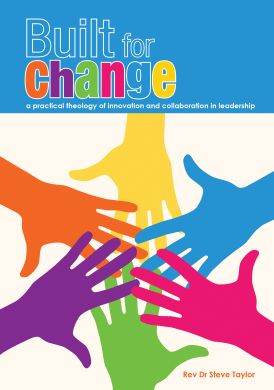
In a few hours, I step into a metal tube for some 22 hours of flying. It has been an excellent 9 days in the United Kingdom, in 3 different countries, speaking to 6 groups, with 3 other booked meetings. The welcome from various folk in the Church of Scotland was warm and the interaction rich. They are in interesting times as a church, with some very thoughtful folk working hard to discern the ways ahead. It was a great gift to me to see how helpful the material from my book, Built for change: A practical theology of innovation and collaboration
 The U2 Conference was a blast – a triumph of passion over obsession. Locating it in Dublin, after conferences in North Carolina and Cleveland was a master stroke, as it located U2 within the context of Ireland and the streets and people in which U2 were formed. Seeing in real life the “boy” who experienced the “war” and encountered “grace” in the midst of the “bad” was very special. My paper on the endings of Pop went well, which given it was stitched together in scraps of hours in January, May and then in Dublin at midnight, was a relief. I find the focus on creativity, imagination, justice and spirituality provided by conversations about U2 to be quite life-giving, all mixed in with academics thinking deeply about how contemporary cultures might be understood.
Then there were the friendships. Previous relationships renewed, new connections made. Connecting with Steve Stockman and his church community at Fitzroy Presbyterian was inspiring. While it has been a great 9 days, it will be good to see the lights of home. (And to fight off jetlag to lead an 8 day blockcourse starting in a few days.)
Friday, June 15, 2018
the endings of pop: live
 Today I shared a paper at the U2 Conference. It’s the third time I’ve shared at the U2 Conference, with presentations on Bullet the Blue Sky as evolving live performance in 2009 and of the role of concert experience in corporate memory making in 2013. Today, 2018 in Belfast, it was the endings of Pop and how U2 end albums and end live performance. I looked at last songs across all U2’s live performances, in comparison with album ending songs and in dialogue with Ed Pavlic, Who Can Afford to Improvise?: James Baldwin and Black Music, the Lyric and the Listeners

The mix of academics and fans make for such a passionate, engaged audience and the questions and interaction were, as always excellent. The paper raises a range of next step questions, regarding the range of emotions present in U2 endings and what the band might be wanting to gain.
The last two U2 conference presentations have become book chapters.
“Let “us” in the sound: the transformative elements in U2’s live concert experience,” U2 Above, Across, and Beyond: Interdisciplinary Assessments (For the Record: Lexington Studies in Rock and Popular Music)
, edited by S Calhoun, Lexington Books, 2014, 105-121
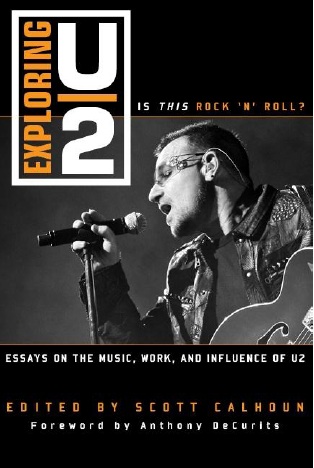
““Bullet the Blue Sky”: the evolving live concert performances,” Exploring U2: Is This Rock ‘n’ Roll?: Essays on the Music, Work, and Influence of U2
edited by Scott Calhoun, Scarecrow Press, 2011, 84-97.
 , edited by S Calhoun, Lexington Books, 2014, 105-121
 edited by Scott Calhoun, Scarecrow Press, 2011, 84-97.
Whether this one does, I’m still not sure. I grateful to those who made the trip financially possible (Trinity College and Church of Scotland Panel of Review and Reform) and to my family who let me take holidays in this sort of mad/obssessive/culturally focused type of way.
Thursday, June 14, 2018
burning bushes in cultures and contexts
It’s been a real privilege to spend a week with the Church of Scotland, speaking at various events on innovation and mission. My thanks to Doug Gay, Trinity College and the Panel for Review and Reform, who generously made the time possible and did the hard work of promoting, organising and hosting. Over four days, I did 5 different events, the shortest 90 minutes, the longest three hours, all with a different focus.
Some events were open to the public and provided a chance in general to work with questions of innovation and mission. Some were focused on senior leadership of national and Presbytery bodies, or those working in theological formation. These gave a chance to compare stories and in the richness of different contexts, gain insight.
 As a way of helping locate myself, and as a way to emphasis how cultures and context create space for innovation, I began each session both with a greeting (mihi) in Maori and showed some images of the burning bush in Aoteoroa New Zealand – and the role of Maori culture, Pacific migration and alternative worship. In the burning vine that is Te Aka Puaho, in the frangipani flowers added to the stained glass window of St Johns Papapatoetoe, in the pumice rocks soaked with methylated spirits that then then burn blue, there are important mission insights, about how diverse cultures hear faith differently.
Friday, June 08, 2018
Listening in mission resource (for Friday, Monday, Tuesday)
 For those attending the Listening in Mission workshop and for the sake of the environment, here is a copy of the KCML Resource (Assignment Reading neighbourhood).
Thursday, June 07, 2018
Innovation and congregations: Built for change (for Thursday, Monday)
My first teaching session in Scotland, for the Church of Scotland – is titled Innovation and Congregations. I’ve been asked to offer Biblical, theological and spiritual resources, drawing from my Built for change: A practical theology of innovation and collaboration
For those attending the workshop and for the sake of the environment (or technology preferences), want an electronic copy, here is a copy of my note – Innovation and congregations: Built for change Thursday workshop.
Tuesday, June 05, 2018
Call for papers: CHRISTIANITY AND THE ARTS IN ASIA
A project I’ve been involved with as part of Knox Centre for Ministry and Leadership for last 2 years – now stepping it up
CALL FOR PAPERS: CHRISTIANITY AND THE ARTS IN ASIA
A Symposium
September 28-29, 2018
University of Otago, Dunedin
Art is an essential dialogue partner for Christian faith. From earliest times, art has given expression to Christian faith. It is a means of contextual theological expression and enriches understandings of doctrine and practice. Art has also served to offer critique of Christian faith.
The Christianity and Cultures in Asia Network calls for papers that reflect on art and Christian faith in Asian cultures. Themes could include:
• How has art in Asia expressed, interpreted and challenged Christian faith?
• How might Christian doctrines be uniquely expressed through Asian art and Asian art forms?
• Can art from Asia shed light on the complex and continually contested relationship between art and faith, including interpretation, authority, hermeneutics and performance?
• How might art in Asia give new insight into biblical texts?
Art is interpreted broadly, including architecture, music, literature, painting, visual media, sculpture, dance, and calligraphy. Presentations that include art are particularly welcomed. This symposium follows the successful symposium on the movie Silence held in March 2017. All abstracts will be blind peer reviewed.
The Christianity and Cultures in Asia Network is a partnership between the Theology Programme at the University of Otago, the Knox Centre for Ministry and Leadership, and the Presbyterian Research Centre at Knox College, Dunedin. The Symposium will encourage use of two substantial collections of print resources held by the Presbyterian Research Centre, the Rita Mayne England collection on Christianity in Asia, and the Chrysalis Seed collection on Christianity and the Arts.
Please submit paper proposals not exceeding 500 words by July 2nd 2018.
Presentations will be 30mins in duration followed by discussion.
Proposals should be submitted to: murray.rae@otago.ac.nz
Wednesday, May 30, 2018
Film review: Mary Magdalene
Monthly I write a film review for Touchstone (the New Zealand Methodist magazine). Stretching back to 2005, some 135 plus films later, here is the review for May 2018.
Mary Magdalene
A film review by Rev Dr Steve Taylor
“Mary Magdalene” the movie was my Maundy Thursday religious experience. It provides rich Gospel reflection, whether watched pre- or post-Easter.
The reputation of Mary Magdalene was ruined by Pope Gregory, who in 591 preached a sermon (Homily 33) that wrongly called her a prostitute. Sadly he never bothered to correct his homiletical error. Mary Magdalene, the second most mentioned woman in the Gospels, became tarred by the church with a label neither deserved nor Biblical. In the Gospel, Mary is introduced in Luke 8:2, named alongside Joanna and Susanna as one who journeys with Jesus.
In Luke 7:37, an unnamed woman who “lived a sinful life” anoints Jesus. Quite how an unnamed sinful woman became, in the homily of Pope Gregory, a named prostitute named Mary has never been made clear. Nor why it took the Catholic Church over 1500 years to clarify a Papal mistake. But on 3 June, 2016, the Catholic church finally relented. Pope Francis gave Mary a feast day, to honour her witness as the first to give testimony to the Risen Jesus.
“Mary Magdalene” is an imaginative response, locating Mary alongside Jesus on the journey toward Jerusalem. Woman are portrayed as leaders and learners, baptisers and blessers. The scene in which Peter (Chiwetel Ejiofor) follows Mary (Rooney Mara) down a long mountain track to a well, all the while protesting that he understands Jesus’ (Joaquin Phoenix) commands better than she does, is a moment that will find many a woman nodding in sympathy. The teaching of Jesus in relation to forgiveness is sensitively applied in relation to women’s experience of rape and gender violence. Mary’s intuition becomes a source of revelation, honouring different ways of knowing that are essential in Christian discipleship. In other words, the movie celebrates what women bring to the mission of God.
Jesus movies are difficult to direct, given an ending that is well-known. Director Garth Davis animates a predictable plot by a powerful portrayal of the first century Roman rule. A sequence of economic injustices are artfully woven into the life histories that shape the call of disciples. Thankfully, and unlike The Last Temptation, the movie avoids any sexualisation of the relationship between Mary and Jesus. The result is a dignifying both of love and gender.
The only blemish is an ending which seems to draw from the Gnostic Gospel of Mary. The Gospel of Mary was discovered in Egypt in 1896. It was not made public until 1955. The most complete text still misses ten pages, including a section from after the Resurrection in which Mary moves from sharing her firsthand experience of Jesus to an ecstatic vision. This missing section seems to resource “Mary Magdalene.” The result is a blurring of lived experience and ecstatic vision and a weakening of the claims for historical accuracy so carefully built in the pre-crucifixion narrations of first century Roman economic exploitation.
Despite this post-Resurrection wobble, the Jesus that emerges is a rich embrace of justice-seeking activist and contemplative: an Easter Jesus worth following, whether first century peasant or twenty-first century #metoo activist.
Sunday, May 27, 2018
Built for change UK trip June 2018
 I’m in the United Kingdom for 2 weeks early June, working with the Church of Scotland and presenting a paper at the 3rd U2 conference in Belfast. The Presbyterian Church of New Zealand has a partner relationship with the Church of Scotland and it will be good to embody that relationship, reflecting with them on innovation, mission and change.
My itinerary is as follows:
I fly into London on Monday, 4 June and train to Glasgow on Tuesday the 5th.
Thurs 7th June, Glasgow – Built For Change: Biblical, Theological and Spiritual Resources for enabling change within congregations (open to all)
Fri 8th June, Glasgow – Listening In Mission/Mission Seedlings (open to all)
Mon 11th June, Edinburgh – Built for Change: Enabling Change At Regional and National Levels (nomination and invite only)
Tues 12th June, Edinburgh – Initial Ministerial Training – critical reflections on downunder models (invite only)
Tues 12th June, Edinburgh – Listening In Mission/Mission Seedlings (open to all)
Wed 13th June, I fly to Belfast and am there until Friday 15th June, at the U2 conference reflecting on the role of popular music in shaping culture. My paper is Friday morning, 8:45 am – The endings of Pop).
I fly out of London back to New Zealand on Saturday, 16 June.
I’m grateful to Doug Gay, Principal of Trinity College, Glasgow University, for making the trip possible. At a personal level, I’m looking forward to escaping a Dunedin winter. I’m also really interested in seeing how my book, Built for change: A practical theology of innovation and collaboration
Monday, May 14, 2018
Can those fines: graced redemption in a modern space
An email a few weeks ago from the University library. With winter approaching, it was an invitation to bring an item for a food bank. In exchange, a library fine forgiven.
· If you pop into one of the University Libraries in Dunedin AND
· Bring an item fit for human consumption for the Dunedin Student Associations’ food banks
· We will waive your fines (up to $30).
 I pondered the grace. A call to participate in making the world a better place. In exchange, redemption, as my shame (a library fine), was redeemed.
A lesson for all those who seek to communicate. The easy way is to point the finger, to name the blame. Such is the cry of fundamentalism.
The sliding way is to ignore the sin. “Don’t judge me” is the cry of tolerance. Yet, as London Grammar remind us, truth is a beautiful thing.
“Miles and miles on my own
Walk with shame, I follow on
…
You’ll be on your knees and struggle under the weight
Oh, the truth would be a beautiful thing
Oh, the truth is a beautiful thing” (Truth Is A Beautiful Thing
Hence the intriguing way is to invite me to participate anew in mission, in ways that name my shame, all the while immersing it in grace.
“Can those fines” did that. It was graced redemption in a modern space, a lesson in speaking the gospel.
Thursday, May 03, 2018
one word: emotional in multiple textures of action
In beginning to prepare for the U2 Conference in Belfast and my Endings of Pop: Benediction, Lullaby or Lament? presentation, some writing this week, as I read the fascinating Ed Pavlic, Who Can Afford to Improvise?: James Baldwin and Black Music, the Lyric and the Listeners
The argument in Who Can Afford to Improvise?
is that song lyrics function uniquely. They might be words, but they are never prose. First, they are received as an experience. They act to hold “our attention to physical and emotional textures woven in the rhythms of the utterance itself” (7). Second, they disrupt. They are a “musical interruption of the report-function usually assigned to what is called prose.” (7) In analysing lyrics, one must consider both physical and emotional textures and the “multiple possibilities, distinct tonalities that communicate at several simultaneous levels” (7-8). This helps as we consider the ending of Pop [Explicit]
, in the form of “Wake Up Dead Man.”
The emotional texture is enriched by the bridge, in which the one word “listen” is repeated eight times. “Listen” is the one word lyric that is disrupting time. The song is moving on, yet in that moving, the same word of action is repeated.
The listening is one word, but in the one word, sustained by repetition, is a complex set of repeated actions, of “multiple possibilities”, of “to” and “over” and “through” and “as”: Listen “to” (your words; the reed). Listen “over” (the rhythm of confusion; the radio hum, the sounds of blades, marching bands). Listen “through” (the traffic). Listen “as” (hope and peach march). The “to” is twice, the “over” is four, the “through” and “as” are once each. The one action – of listening – is actually four actions – to, over, through and as. This is a demanding understanding of humanity, and the complexity of engaging suffering. In the face of the physical action of suffering, there are multiple emotional textures and a complex range of response.
 , in the form of “Wake Up Dead Man.”


 )
)