Thursday, August 04, 2016
saying no
At the start of the year I planned myself a treat. I was deep in the last days of writing my Built for Change book and I needed some light at the end of the tunnel. I love the academic stimulus provided by the annual Ecclesiology and Ethnography conference in Durham. Around that, for the last few years, I have found renewal at Holy Island. So I put in place a plan, to return to the United Kingdom in September.
I found another set of conferences around the Ecclesiology and Ethnography and submitted abstracts (total of three). Two abstracts were accepted. One wasn’t. But it was enough. I spotted a number of potential funding avenues. Over recent months, I’ve worked hard to shift the abstracts from ideas to full draft journal articles in preparation.
Over the last weeks, I’ve begun to wonder if the benefits of the treat might actually be outweighed by other realities. Academically, a number of opportunities closer to home have presented themselves. Financially, airfares are higher than I budgeted. At the same time, money is tight in academic circles. There could be some help, but not as much as I had calculated. Work-wise, there are signs I need to be grounded, not working from a laptop on the road. Family wise, I have a partner on the home stretch of a PhD and the “how can the rest of the family pitch in plan” doesn’t work as well if I’m away for a period overseas. I do need a treat, but this treat felt like it was being increasingly diminished.
Last week, I regretfully decided to withdraw my various conference presentations. I feel regret. I will miss the stimulus and the conversations and the space that is created. The networks are important. People have made decisions and given me opportunity and they will now have to reshuffle programmes.
I also feel relief. I’m glad I can say no. I very much enjoyed taking the 10 days I had blocked out with conferences and writing into the blank space of the calendar: “work on lectures”; “quiet day to read”; weekend away with family.” It has also been good to remind myself of privilege: that to even contemplate an overseas conference is in fact an enormous treat. That is a light in a tunnel in itself.
I share this story in order to honour this blog. On this blog I record things that go according to plan, including abstracts that get accepted and things that get written. So it seems fair to also record things that don’t go to plan and things that won’t get done and the ongoing unfolding of life.
Wednesday, August 03, 2016
Star Trek Beyond: a theological film review
Monthly I write a film review for Touchstone (the New Zealand Methodist magazine). Stretching back to 2005, some 100 plus films later, here is the review for August 2016.
Star Trek Beyond
A film review by Rev Dr Steve Taylor
Star Trek was born 51 years old, with a pilot episode shot in 1965. Being 51 in the entertainment industry means the need to win new friends while keeping old ones.
“Star Trek Beyond” delivers. For old fans, there is the familiarity of ship, crew and the willingness to boldly explore strange new worlds. In “Star Trek Beyond,” this means seeking to rescue a ship ambushed beyond the nebula. For new fans, the action quickly moves to warp speed, as USS Enterprise encounters the evil technologies of Commander Krall. For all fans, there is old technology, of motorbikes and VHF radio as weapons in the defeat of Krall. For Kiwi fans, there is Wellington born, Karl Urban as Dr Bones McCoy.
Being 51 means adapting to a changing world. In “Star Trek Beyond,” Sulu (John Cho) is gay, with a husband and young daughter. In addition, strong female roles are provided by the well-known figure of Lieutenant Uhura (Zoe Saldana) and the introduction of Jaylah (Sofia Boutella), becoming a rescuer despite the previous pain caused to her in an ambush by Krall.
Being 51 also means facing death. The first line in the pilot episode of 1965 belonged to Leonard Nimoy (“Check the circuit”). “Star Trek Beyond” pays homage to Nimony, who died in 2015, aged 83. This involves memorial credits, along with the young Spock (Zachary Quinto) of “Star Trek Beyond” finding strength in a photo of the original Star Trek crew, Nimoy included.
It is one thing to face the death of an elderly man, quite another that of an acting colleague in the middle of the Star Trek reboot. Anton Yelchin, who plays Chekov, died in a freak automobile accident in June 2016, aged 27. It makes poignant Captain Kirk’s (Chris Pine) toast to absent friends and the liquor taken from Chekov’s locker. In a Western society obsessed with youth, navigating the strange new world of death is an essential dimension of being 51.
Star Trek has from the beginning blended technology, action and philosophy. The pilot episode was considered cerebral and intellectual. “Star Trek Beyond” embraces philosophy by mirroring two scenes. Early on Captain Kirk meets with Commodore Paris (Shohreh Aghdashloo). In deep space, he describes how easy it is for a Captain to get lost. As the movie ends, Kirk meets again with Commodore Paris. Again Kirk notes how easy it is for Captains to get lost in deep space, yet the strength he finds in human partnership. It makes the warp speed action between these two scenes the unfolding exploration of humans facing the existential fear of losing their inner compass.
It is a question Jesus explores in Luke 15. Three parables are grouped together around the experience of being lost. What emerges is a different mirroring, in which direction comes not from human partnership, but from God, acting as seeking shepherd, searching woman and waiting father. Whether the “distant country” of Luke 15:13 can be stretched to include the strange new worlds beyond the nebula becomes the question of faith for every viewer.
Rev Dr Steve Taylor is Principal of Knox Centre for Ministry and Leadership, Dunedin. He is the author of Built for change (Mediacom: 2016) and The Out of Bounds Church? (Zondervan: 2005) and writes widely in areas of theology and popular culture, including regularly at www.emergentkiwi.org.nz.
Tuesday, August 02, 2016
Let us sing (in harmonies) a new song in this strange land
Last week, I was asked to deliver a keynote address at the Pacific Island Synod, a gathering of Samoan, Niuean, Tokelau/Tuvalu and Cook Island communities from around Aotearoa New Zealand. I was asked to address the question: How can we sing the Lord’s song in a strange land? As soon as I received the invitation, I asked a KCML colleague, Malcolm Gordon, if he might have a song to sing. A few days before, I gave him the script for my talk and he responded with a yes.
The Pacific Island Synod ended with a feast on the Saturday evening. This included a number of speeches, in which gifts were offered. With Malcolm present, I stood and announced that we as KCML had a gift, that of a song, written specifically – new – for this occasion. I noted the theme – How can we sing the Lord’s song in a strange land? – as a question not only for Pacific Island communities, but also for Malcolm and I as Palangi. Together, as diverse nations, we share a common quest, a shared mission, that of seeking God’s help in singing a new song.

Malcolm passed copies of the music around. He noted he had a melody, but that the song needed harmonies. There was an instant murmur among those gathered, with so many fine voices and such a rich tradition of song among Pacific peoples. As Malcolm began a cappella, those gathered began to improvise harmonies. Together in our diversity we produced a new song.
As the Synod Clerk wrote to me later “It was a great moment when the place just broke into song. Thanks Steve and Malcolm for such a great finish to the day. We definitely sung a new song in this strange world.”
Sunday, July 31, 2016
accessible yet substantial, incredibly helpful: Built for change book review
 Here is another review of Built for Change, by Peter Armstrong, a Uniting Church minister in Queensland. It is the first review to pick up on the creative (innovative) structuring of the book and to note the way that each part of the book offers differing ways into innovation, collaboration and leadership
Innovation is what Steve’s book is all about. Innovation, collaboration and leadership!
The sub-title of the book is ‘…a practical theology of innovation and collaboration in leadership’ and it is very much born out of Steve’s own work and ministry in this area. Even the book itself is somewhat innovative in the way it is set out, beginning with the ‘final chords’ of an outro and concluding with an intro. Within the metaphor of music Steve takes the reader on a journey that he himself has travelled, into the experiences, observations and reflections of collaborative innovation in the context of leadership.
The three parts of his book (between the ‘Outro’ and the ‘Intro’) are (i) Leading Outward; (ii) Leading Deeply; and (iii) Leading Inward. Each part offers differing ways of looking into innovation, collaboration and leadership. Steve offers a biblical framework from 1 Corinthians 3 and 4 looking at six roles and actions – Servant (Listens); Gardener (Plants); Builder (Structures); Managers (Resource); Fools (Risk); and Parents (Guide). He tells the story of experiences on the ground of innovation, collaboration and leadership – both observed as well as engaged. He opens up a theology of connection where leadership theory can converse with theology. And he reflects on tradition as it provides the historical context and cultural values of innovation, collaboration and leadership within institutions and communities. The final section looks at the leader personally, and again from practice and principles, Steve offers wisdom and encouragement for anyone on this journey themselves.
I found this an incredibly helpful book in that it captures wonderings and provides ways to both reflect on and engage my own sense of call to these areas. It is easy to read, in that it is accessible in its form and language, but it is substantial because, for me, it has generated so much more wondering and visioning for what is ahead for me and the church that I call home. I certainly would recommend “Built for Change” to anyone who is wondering or seeking to practice ‘fresh words and deeds’ in this time when innovation, collaboration and leadership have much to offer our church and wider community. Thanks Steve for taking the time to put all of this into a book for others to glean.
“Built for Change” is available in Australia through MediaCom Education Inc. or New Zealand through Angelwingsresources@gmail.com.
Wednesday, July 27, 2016
Pacific Island Synod bound
I’m delighted to be heading for Auckland to be part of the Pacific Island Synod over the weekend. I will be doing a keynote presentation on Friday, on the topic – singing the Lord’s song in a strange land. I’ve enjoyed the preparation.
This involves working on the bringing of greetings in five different languages and a final benediction in Samoan language. It has involved researching climate change in Pacific Islands and finding resources from Christian faith that might sustain communities entering this contemporary experience of exile.
I will also be weaving in wisdom from the Uniting Church Revised Preamble, including paragraphs that I observed having impact on Fijian Uniting Church leaders like Eseta Meneilly:
1. When the churches that formed the Uniting Church arrived in Australia as part of the process of colonisation they entered a land that had been created and sustained by the Triune God they knew in Jesus Christ.
3. The First Peoples had already encountered the Creator God before the arrival of the colonisers; the Spirit was already in the land revealing God to the people through law, custom and ceremony. The same love and grace that was finally and fully revealed in Jesus Christ sustained the First Peoples and gave them particular insights into God’s ways.
10. After much struggle and debate, in 1994 the Assembly of the Uniting Church in Australia discovered God’s call, accepted this invitation and entered into an ever deepening covenantal relationship with the Uniting Aboriginal and Islander Christian Congress. This was so that all may see a destiny together, praying and working together for a fuller expression of our reconciliation in Jesus Christ.
It has also involved seeking to understand more about a Samoan proverb: Fetu’utu’una’i’ muniao. In conversation with a number of Samoan leaders, I wonder if this is could be understood as an Oceania hermeneutic. I can see elements in fetu’utu’una’i’ muniao of the Wesleyan quadrilateral – Scripture, experience, reason, tradition – all held beautifully in an action-reflection, communal approach to voyaging. More later, after I see how fetu’utu’una’i’ muniao lands in the next few days.
Wednesday, July 20, 2016
Built for change: review by John Littleton for South Australian Anglicans
Another review of my latest book Built for Change: a practical theology of innovation and collaboration in leadership. This one was initially sent to Anglicans in South Australia.
Dear friends, I bring Steve Taylor’s new book to your attention and commend it. I enjoyed the holistic, collaborative and theologically reflective leadership demonstrated in this book. The book is a challenging and rewarding read. Careful reading provides evidence of a reflective practitioner at work. An account of adaptive leadership in practice is combined with a connectional theology of leadership and an analysis of Jesus the innovator as reported in the Gospels. The word innovation takes on a “Christological shape.” Chapter 8 is entitled “Leading myself” and introduces a section on practical and personal leadership strategies. The book shares stories and offers insight into a personal spirituality of change.
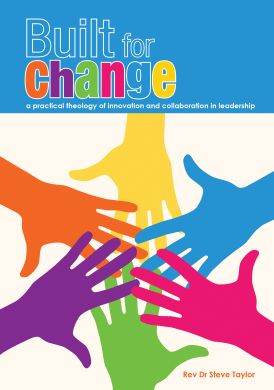
Built for Change: a practical theology of innovation and collaboration in leadership explores the six strengths that change requires, and demonstrates that collaborative change is both practical and possible. Steve wrote ‘Built for Change’ around the concluding of his placement as Principal of Uniting College in the Adelaide College of Divinity in 2015 and transitioning into his new role as Principal for Knox Centre for Ministry and Leadership in Dunedin, New Zealand.
“Built for Change” is available in Australia through MediaCom Education Inc. or New Zealand through Angelwingsresources@gmail.com.
Review 1 here;
Tuesday, July 19, 2016
living off a laptop
Driving back from Christchurch yesterday, it suddenly occurred to me that I’ve only managed one day working at my office desk, surrounded by my books and files, in the last 4 weeks. Certainly not planned!
First, there were 9 days of block course intensive in Wellington. This was followed by that one day at the office – in which I scrambled to prepare printed resources and organise for the next major piece. That was 15 days on the road. This involved 8 meetings and 5 speaking engagements, spread across 2 countries, 8 cities and towns, made possible through 5 flights and 2 rental cars.
 It wasn’t something I intentionally planned. Rather it was simply what emerged as I tried to make sense of a range of commitments and a set of practical realities.
A desire to be Knox national, rather than Knox Dunedin, combined with a rugby test in Dunedin that sent accommodation prices through the roof, made Wellington a logical option for a KCML blockcourse. An academic conference in Melbourne, made possible a few days of recovery in a friends holiday house near Sydney. A request to speak in Wellington for two days to a group of ministers (Give us this day our daily bread: spirituality of eating) made sense as a stop over coming back from Sydney. A need to connect with incoming (2017) interns and explore potential placements in the Christchurch area, made sense as a next stop after Wellington. Interns and potential placements spread between Rangiora and Geraldine made logical a rental car and so a drive from Christchurch back to Dunedin (mixed in with a lovely few nights restoration at our family holiday home). During which the realisation hit me: one day working at my office desk in the last 4 weeks.
Which meant that today, one of my team cheekily asked the rest of the team if anyone knew who I was. While another asked if I deserved a desk!
Living off a laptop is made possible because of:
1. A flexible family, willing to come with me to academic conferences and join me on holidays and road trips between Christchurch and Dunedin.
2. A focused, competent, self-sufficient work team, very secure in their roles, who get on with their tasks, whether I’m present or not.
3. Evernote and Google calendar, which helps me keep track of a range of details and notes.
4. A computer (Mac) which enables me to access material for speaking engagements as I go, allowing me to be responsive to context and room, to prepare a talk in a hotel room or beachside holiday house.
5. A cellphone, which I can tether as a hot spot and deal with email.
When I began as Principal, I wanted to be a national Principal, not a Dunedin Principal. However I never envisaged the type of movement and travel that would result. I love the richness, the mix of developing leaders, presenting research, offering professional development and dreaming futures with churches and leaders.
But I also love being home and having an office and seeing my books and settling back into the regular routines of running and (snack) writing.
Thursday, July 14, 2016
spirituality of eating: a lectio vocatio
I led a two day retreat for Wellington Ministers this week. The brief was fairly broad: to speak on something they’d not heard from me before. I decided to focus on “Give us this day our daily bread” and explore the spirituality of eating and the implications for ministry and mission.
Each session involved a five step cycle, which I called “lectio vocatio” – listening to God and each other – amid a shared vocation as ministers.
- Stories: reflective questions that invited story sharing
- Bible stories – read firstly for ordinary eating
- Bible stories – read secondly for theological purposes
- Ministry stories
- Application: Given the spirituality of “eating” in this Biblical story, what are the implications for ministry and mission?
I was rifting off lumia domestica, an art exhibition by Willie Williams, and how he takes ordinary things (culled from Oxfam shops across the world), and makes reflective, beautiful things. So in the ordinary of eating, there is beauty, which makes us go “wow.”
A first session revolved around Abraham’s hospitality in Genesis 18, to consider call
- Where are the places in which you have met strangers?
- What are the practices of hospitality you have experienced?
People had been invited to bring some cloth meaningful to them. These were laid on the table, as a way of making ourselves present in the circle of God’s love (in which our call to ministry begins). The diversity and colour was a rich reminder of particularity and uniqueness in ministry.

A second session focused on the widow of Zarepath in 1 Kings 17, to consider justice, community development and climate change
- Who are the “widows” in our community?
- What are their sticks and flour?
People had been invited to bring a tin can. We reflected on where the “daily bread” we eat comes from and what we knew about the production and people. This became intercession, as we placed our tin cans prayerfully.

A third session focused on Rahab in Joshua 2, to consider formation in mission and our willingness to work with what God is doing in unexpected places
- Where have you experienced shelter (food and a roof) in the lands of another?
- When have you unexpectedly heard affirmations of faith?
In ending, we cleared the table. As each person reclaimed their cloth and tin can, they shared an action they would like to engage, as a result of engaging together. The table was emptying, yet there was a renewed intentionality toward our ordinary tables of mission and ministry to which we were returning, grounded in a depth of contemplating (lectio) our vocations in ministry together.

I very much enjoy this type of teaching. The theme provided a different way to reflect on ministry and mission. The movement between silence, Scripture, story and discussion felt empowering, yet provocative. The chance to build something over a number of days opened up every deeper layers of conversation.
Key books in my preparation were: John Koenig, Soul Banquets: How Meals Become Mission in the Local Congregation


Wednesday, July 06, 2016
Built for change: review by Peter Overton
 On Facebook Peter Overton has just posted a (lovely) review of my latest book Built for Change: a practical theology of innovation and collaboration in leadership.
This is the book to read, re read, reflect, buy for leadership teams, read, re read, reflect. It’s not a quick fix, it’s adaptive leadership and way more. It’s the story of adaptive leadership in practice and much more. He uses image of Servant/listener, Gardener, Builder, Resource Manager Fool and Parent to unpack Adaptive leadership in I Cor 3 and 4 and applies this to National Church Life Survey. I have already done a Elders/leaders seminar for another Church using the models in this book and it really connected with them, we meet again in Six months to review progress. This by the way was in preparation for a new placement coming in 2017 to the Church so in my words they can be built for Change. Congratulations Steve Taylor.
Built for Change: a practical theology of innovation and collaboration in leadership explores the 6 strengths that change requires, and demonstrates that collaborative change is both practical and possible. Steve wrote ‘Built for Change’ around the concluding of his placement at Uniting College and transitioning into his new role as Principal for Knox Centre for Ministry and Leadership in Dunedin, New Zealand. The book shares stories, provides theological reflection on Jesus the innovator and offers insight into a personal spirituality of change.
Built for change is now available in Australia and New Zealand. NZ orders via this page. Australia orders to mediacom dot Org dot Au.
Tuesday, July 05, 2016
Our Little Sister: film review
Monthly I write a film review for Touchstone (the New Zealand Methodist magazine). Stretching back to 2005, some 100 plus films later, here is the review for July 2016.
Our Little Sister
A film review by Rev Dr Steve Taylor
“Our Little Sister” is a window into rural Japanese culture. It is a politely, heart-warming, albeit slightly surreal alternative, to Japan as industrialised, high-tech and fast-paced.
Three adult sisters share life in the family home. Together they have found a way to live despite being abandoned by their parents: a father who left for another woman and a mother who disappears for fifteen years, crippled by grief.
At their father’s funeral, the three sisters meet their thirteen-year old younger sister for the first time. In the face of shared grief, she joins them in the family home. It sets in motion the facing of an unfolding set of bitter-sweet, until then unexplored, memories.
“Our Little Sister” began life as manga. Manga is comic and cartoon, a Japanese art form read by all ages. It is big business, an industry worth over $5.5 billion dollars. Manga includes more than action and anime. It has spilled into commerce and comedy, history and horror, murder and mystery, sci-fi and fantasy. There is even a Manga Bible, published in 2006 by Next, a non-profit organization. It aims to appeal to those who no longer attend church or find traditional Bible translations less than accessible.
“Our Little Sister” is Josei manga, a genre aimed at women in their late teens and early adulthood. It began life as a monthly serial: “Umimachi Dairy.” Created by Akimi Yoshida, “Umimachi” means Seaside Town in Japanese. It suggests a rural idyll common among industrialised urban dwellers.
The attempt by director Hirokazu Koreeda to turn the episodic nature of monthly serial into a plot arcing over 120 minutes is less than successful. Three patterns of life are introduced. Daily, there is the preparation and consumption of food. Food is a setting for memory making and community building. This involves repeated scenes both at home as the younger sister is slowly woven into domestic life and at the local diner. What emerges is an approach to food not as recipe books and celebrity chefs but as knowledge shared in inter-generational making.
A second pattern is seasonal. The movie is structured around Japanese rural idyll. These include the cherry blossoms of spring, the plum harvest of summer and the capture of white bait in season. These weave further layers in the unfolding of memories.
A third pattern is generational. In “Our Little Sister”, these involve funerals and memorials rather than births and weddings.
Each of these three patterns amplify the dysfunctional distortion at the movies’ heart. Food, seasons and funerals create memories, each of which is distorted by the strangeness of four sisters live in a mono-generational family unit.
Mono-generational makes sense when your manga market involves women in their late teens and early adulthood. But as way of life it ends up becoming a somewhat surreal “seaside” diary.
“Our Little Sister” is well worth the watch. Despite the attention required when reading subtitles, the humour is rich, the characters rewarding and the crossing of cultures endearing, even if slightly surreal.
Rev Dr Steve Taylor is Principal of Knox Centre for Ministry and Leadership, Dunedin. He is the author of Built for change (Mediacom: 2016) and The Out of Bounds Church? (Zondervan: 2005) and writes widely in areas of theology and popular culture, including regularly at www.emergentkiwi.org.nz.
Monday, July 04, 2016
Fieldwork in theology: learnings down-under ANZATS Forum
“Fieldwork in theology: learnings down-under.”
Tuesday, 5 July, ANZATS, 4-5:30 pm
Welcome to the Fieldwork in theology forum. This forum focuses on the place of qualitative research in theology. The intention is to share fieldwork notes, the realities encountered in using qualitative research in theology.
Why? The use of empirical methods in theological research is a growing trend in theology. Each year since 2012, there has been an annual Ecclesiology and Ethnography conference in Durham, UK. In 2012, Eerdmans launched two books: Explorations in Ecclesiology and Ethnography

So journal, books, conferences in UK and US all point to a growing trend in theology.
Downunder, the most internationally recognised writing from Australia comes from Catholic theologian, Neil Ormerod. He wrote a chapter for The Routledge Companion to the Christian Church
Ormerod’s chapter was titled “Ecclesiology and the Social Sciences”. He wrote of a “major divide in ecclesiology, between those who study … an idealist Platonic form in some noetic heaven, and those who study it more as a realist Aristotelian form, grounded in the empirical data of historical ecclesial communities.” The Routledge Companion to the Christian Church, Routledge: London and New York, 2008, 639-654.
Ormerod develops this further in his 2005 paper for the Theological Studies journal. He notes that “attempts to engage with the social sciences have not been prominent among ecclesiologists.” (815) For Ormerod, this is a theological problem: “underlying these difficulties lies one of the most profound theological mysteries, that of the interrelationship of grace and nature.” (818)
Ormerod’s downunder perspective gives us some definition. Fieldwork in theology is about a focus on ecclesiology not as idealized, but as grounded in the lived experience of historical ecclesial communities. The use of social sciences to clarify the shape of this lived experience of historical ecclesial communities. The belief that qualitative research is theological: faith seeking understanding at the intersection of grace and nature.
How and Who? In order to explore Fieldwork in theology: learnings down-under, I have brought together a panel of four folk
- Darren Cronshaw
- Lynne Taylor
- Kevin Ward
- Steve Taylor
All have undertaken fieldwork in theology, using qualitative research in pursuing theological questions.
I have asked them each to share for around 10 minutes:
- First, a summary of their fieldwork in theology research
- Second, their most vivid experience of using qualitative research in theology.
- Third, the most complex issue generated by your use of fieldwork in theology.
The aim is not to present research results as such. Rather it is to explore methods, methodologies and theologies – the issues arising as fieldwork research is undertaken in theology. We will do this by using our discussion time not to ask specific questions of each paper, but rather construct a mind map, asking what are issues generated by the use of empirical research in theology.
My hope is that this helps us focus on the realities of research and perhaps set a future research agenda.
Saturday, July 02, 2016
Wanangha nai: a post-colonial indigenous atonement theology
I’m crossing the ditch this week. First stop is Melbourne, where I am part of ANZATS (Australia New Zealand Association of Theological Schools). Second stop is holidays (more on that later).
In Melbourne at ANZATS I’m doing a number of things. These include leading a Forum that I have initiated: Fieldwork in Theology: learnings down-under.
“Fieldwork in theology: learnings down-under”
This forum will focus on the place of qualitative research in theology. The use of empirical methods in theological research is a growing trend, as evident in the new Ecclesial Practices journal, the annual Ecclesiology and Ethnography conference in Durham, UK and sessions at AAR since 2012. This forum will provide space to share fieldwork notes, including experiences of using qualitative research in theology, issues generated by the use of empirical research in theology and ways to network.”This involves a panel of four (Dr Cronshaw, Dr Taylor, Lynne Taylor, Dr Ward). Each will address the question: first, their most vivid experience of using qualitative research in theology; second the most complex issue generated by their use of fieldwork in theology. The aim is to allow discussion of the issues arising as fieldwork research is undertaken in theology, in order to engage the topic focus: the place of qualitative research in theology.
Third, I am presenting a conference paper. It emerges from my experiences on Walking on Country last year and ongoing conversation, digitally and by long-distance telephone call, with Denise Champion.

Titled
Jesus as the divine tracker: an indigenous experiment in a post-colonial atonement theology
Here is the introduction …
Wanangha nai. Which means in Adnyamathanha, Where am I going? In this paper, where I am going is to share the story of Great Uncle Alf, honoured by the South Australian Police in 2004, who, I will argue embodies atonement: a knowledge of “this place” so deep that the lost are found and returned to home and community.
To do that I need to provide a methodology, which I do through James McClendon’s notion of biography as theology: that by paying attention to lives, we find narratives that guide theology’s faithful evolution (Biography as Theology: How Life Stories Can Remake Today’s Theology
).
And a Biblical conversation, which I do in conversation with Kenneth Bailey, who argues that Luke 15 draws from Psalm 23 and is an atonement theology in which what is lost is found and heaven rejoices (The Good Shepherd: A Thousand-Year Journey from Psalm 23 to the New Testament
).
Wanangha nai: Where am I going in post-colonial missiology?
First, Missio Dei – God is active in the world. Hence in cultures there are God-bearers, in whom God is Incarnate. Not fully. But enough that God is revealed and cultures and communities are dignified as God-bearers.
Second, paying attention to “ordinary readers.” Gerard West, in the context of South Africa, argued that it was well past time for the academy to read Scripture not by educating the non-scholarly to read the Bible like the academy (Reading Other-wise: Socially Engaged Biblical Scholars Reading with Their Local Communities
). Rather by nurturing communities of “intuitive and critical interpreters …[who].. come to the biblical texts from different perspectives that are equally valid.” I will explore what that means among an indigenous community in South Australia.
 ).
). ).
). ). Rather by nurturing communities of “intuitive and critical interpreters …[who].. come to the biblical texts from different perspectives that are equally valid.” I will explore what that means among an indigenous community in South Australia.
After 9 months immersed in Aotearoa New Zealand and the role at Knox Centre for Ministry and Leadership, I am really looking forward to stepping off the dance floor/crossing the ditch, to see friends, to say hello to Melbourne and to pick up some research threads that remain important to me and my mission journey while in Australia.
Tuesday, June 28, 2016
Being a birthing Church: litany in times of change
God in stories of change was the devotional theme for our winter block course. Where is God in change? Who are humans in change? How then might we respond, as humans, as interns? Every morning we gathered around these questions, with interns being invited to engage a set of Scriptures
1 Thessalonians 2:6b-12
Genesis 18:1-14 (Sarah)
Genesis 16: 1-14 (Hagar)
Genesis 18:1-14 (Abraham)
1 Samuel 1:1-20 (Hannah)
Luke 1:39-45 (Elizabeth)
Luke 1:39-45 (Mary)
A key resource in the choice of Scriptures was Margaret Hammer, Giving Birth: Reclaiming the Biblical Metaphor for Pastoral Practice
 The link between change and birthing made sense first, of the fact that a third of our interns are experiencing changes with birth. A very healthy happening! Second, the call to be the people of God in this season, of which change is normal.
After devotions ended today, I wrote a Litany (a series of petitions, usually recited with call and response in a recurring formula). I wanted to capture key themes gifted to us by each intern in their devotion and provide some sort of thread to bind the days together.
In Paul, Silas, Timothy
The nursing mother cares
The father encourages
ALL: We might suffer (as church)
Yet the mission gives birthIn three strangers
The door of hope opens
As Abraham looks up
ALL: We might laugh (with Sarah)
Yet the barren give birthIn domestic discord
God sees:
Speaks, protects
ALL: We might despair (with Hagar)
Yet the vulnerable give birthIn Eli’s challenge
Amid despairing prayer
And heartfelt honesty
ALL: We might weep (with Hannah)
Yet the faithful give birthIn adolescent haste
Christ dwells
Spirit fills
ALL: We might hurry (with Mary)
Yet young and old give birth
Friday, June 24, 2016
Being a guest, hosting a host: KCML in Wellington
It is always fun when you find yourself as guest hosting a host. It was a joy on Tuesday night for KCML to host the Wellington Forum of Central Presbytery. The place was packed. Extra chairs were needed with locals suggesting it was the largest ever gathering of the Wellington Forum.
When we as KCML began planning to move our winter blockcourse from Dunedin to Wellington, one of our hopes was that we would find ways to connect locally, both with place and with the Presbytery.
When we emailed the Presbytery, we discovered that the Wellington Forum, which meets every few months, was meeting on the Tuesday of our arrival. Great timing.
After a number of conversations, the Forum kindly agreed to meet at Silverstream Retreat, where KCML is staying. We agree to share a meal, for those able to come at 6 pm. Which meant that as newly arrived guest, I got to welcome Presbytery members to dinner.

It was great to look around and see a room with interns at every table, eating with Presbytery members from across the Wellington region.
When the Forum began officially after dinner, KMCL was given 40 minutes. First, we invited two of our interns to share about their experience as interns. Second, we launched two hot off the press KCML resources. KCML is committed to resourcing the local church and in the last month, we have released a CD and a book.

Songs for the saints is a musical resource for small churches by Malcolm Gordon. Built for Change is my new book, which reflects – practically, theologically – on innovation and change. I had hoped to have actual copies. However stocks are already low in Australia. Good news for the book on one side of the Tasman, bad news for it on this side. I mocked up a copy, which meant that both resources could be physically blessed by Kevin Ward, Senior Lecturer at KCML.

Third, the KCML strategic plan was shared, followed by questions. The plan was recently endorsed by Council of Assembly and this was the first time it was shared publicly. It was great to talk about Presbytery partnerships, New Mission Seedlings, National Learning Diploma and to sense the interest and enthusiasm from those present. “Can I have a copy of your powerpoint for my church?” was a great question to be asked.
All in all, a great evening for KCML and for our interns, as together we experienced being Presbyterian, being part of the wider church.


 )
)