Tuesday, January 20, 2015
Mission and Community Service Intensive
A course I’m developing this year … Mission and Community Service Intensive

Explore the promise, possibilities and tensions in the relationship between mission, church and social service agencies in contemporary Australia. Can there be a place for Christian faith and historic identities in the contemporary funding climate? Must faith and spirituality live in contradiction? Are words and deeds mutually exclusive? How might professionalism, power and the prophetic be negotiated?
The course will utilise a practical theology model, seeking a critical, theological reflection on lived experience. This will involve a case study approach, through which questions are identified, and a dialogue created with current research.
The learning will occur in three phases:
- Phase one – Sharing case studies. Four evenings, February 9-12, 7-9 pm.
- Phase two – Reflecting. Participants will isolate a question emerging from a case study and undertake wider research.
- Phase three – Workshop days. Participants will present their case study, sharing with one another, insights that have emerged as they have read and thought more widely, May 15-16, 9am-4:30pm (tbc)
Course facilitators will include Dr Steve Taylor, Rev Peter McDonald and Joanna Hubbard (tbc). Case studies presenters will include Dr Bruce Grindlay, Dr Ian Bedford (more to be confirmed). Options for enrolment include professional development, audit and credit.
Enrol at Student Services
P: 08 8416 8400
E: college dot divinity at flinders dot edu dot au
Venue: Pilgrim Uniting Church, 12 Flinders St, Adelaide.
Sunday, January 18, 2015
best fixed term role in Adelaide: PA to the Principal
First day back at work, my PA regretfully told me that she needed to resign, due to personal reasons relating to an unexpected and critical health concern in the family. While a real blow for us all, I do want to affirm the values she displayed, in particular the priority on family.
So my (unexpected) priority for my first weeks back is to find another PA (9 month contract (0.8FTE) (maternity leave))
It’s an excellent opportunity for a senior level Personal Assistant to join a highly focused team and work for a creative, passionate Principal. The successful applicant will need to be well organised, proactive and able to think for themselves. The role includes organising meetings, agendas, papers, taking minutes, keep my diary and communication flowing around a busy work team.
Proven experience in supporting a busy executive is required and support of the ethos and mission of the Uniting Church is essential. More information is here, with applications close Monday, February 2, 2015.
Monday, January 12, 2015
footnote 29 My thanks to Shannon Taylor
 Waiting for me when I got back home from holidays was Colonial Contexts and Postcolonial Theologies: Storyweaving in the Asia-Pacific
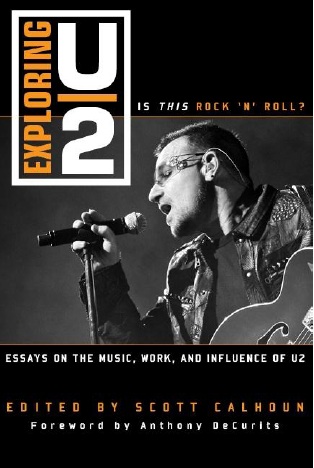
Like the U2 book from a few weeks ago, this -hard- cover also is stunningly, beautiful – a painting by Mark Yettica-Paulsen (who also has a great chapter on Mission in the Great South Land. An Indigenous perspective, which will be compulsory reading for my mission classes from now on.)
I have a chapter, which I co-wrote with Uniting Church Congress Minister Tim Matton-Johnson. Titled “This is my body? A postcolonial investigation of indigenous Australian Communion Practice,” it explores the elements – bread and wine – and the shapes they take (or can not take) as they move between cultures. It is a dialogue with William Cavanaugh’s Being Consumed: Economics and Christian Desire

It is a chapter which, when I sat down to re-read it tonight, I decided I was very, very pleased with. Including footnote 29 “My thanks to Shannon Taylor for her research assistance in this section.”! She had done some initial literature searching in one section of the paper and so it was a great thrill to acknowledge that as the article was written.
Wednesday, December 24, 2014
Scholars worship too
It has been an extremely productive year for me in terms of writing. I have just completed my seventh piece of work which, considering my day job as a Principal, and when placed alongside regular monthly film reviews, makes for an extremely productive year.
At church on Sunday, the phrase “scholars” lept out at me. The Magi, scholars from the East, come to worship. There was a sense that scholarship was welcome around the Christmas child. Thanks Jesus.
What I submitted today was a journal article to M/C Journal, a fully blind peer-reviewed journal for media and culture. It is my first publication attempt in relation to my fresh expressions: ten years old research project.
Here is the title and abstract.
The complexity of authenticity in religious innovation: “alternative worship” and its appropriation as Fresh expressions
Philip Vanini’s theorising of authenticity as original and sincere helps parse the complexity of contemporary religious innovation. Ethnographic research into new expressions of church (“alternative worship”) showed that authenticity was a generative word, a discourse deployed in these communities to justify innovation. Sarah Thornton’s research into club cultures similarly demonstrated an entwining of marginal self-location with a privileging of authenticity. Such acts of self-location, so essential for innovation and identity, were complexified when appropriated by the mainstream (“Fresh expressions” of church). The generative energy therein became focused not around originality but in maintaining the sincerities of existing institutional life.
The seven pieces for 2014 are as follows (four have already been published, which leaves three moving at various rates of speed with editors, which is quite standard).
Two peer-reviewed journal articles
“The Congregation in a Pluralist Society: Rereading Newbigin for Missional Churches Today,” Pacifica: Australasian Theological Studies, 27(2), (2014), 1-24, (co-authored with D. Cronshaw).“The complexity of authenticity in religious innovation: “alternative worship” and its appropriation as Fresh expressions.” (Under review, M/C Journal)
Three peer-reviewed book chapters
“Let “us” in the sound: the transformative elements in U2’s live concert experience,” U2: TRANS- , Going Across, Above, and Beyond with U2, edited by S Calhoun, Lexington Books. (Published).“Embodiment and transformation in the context of e-learning,” Learning and Teaching Theology: Some Ways Ahead, edited by In Les Ball and J. Harrison, Morning Star, 2014, 171-184. (Published)
“Inhabiting Our Neighbourhoods: Plot by plot, plant by plant,” for “Inhabiting Our Neighbourhoods”: a flagship publication of Urban Seed’s new Urban Studies Centre. (Under review).
Two “Other public research outputs”
(In other words they might be important but not in the eyes of the University “peer review” machine.)Colouring outside the lines (Mediacom).
“Carrying Cuth,” for Farewelling Our Fathers. (It is a “Men’s Studies” take on how men of my generation (40 and up) process the death of our dad’s. (under review).
Now to enter the Sabbath re-creation offered by the entry of the Christ-child into our world
Sunday, December 21, 2014
Interstellar: a Christmas reading
Monthly I publish a film review for Touchstone (the New Zealand Methodist magazine). Stretching back to 2005, some 85 plus films later, here is the review for Dececmber 2014, of Interstellar. In particular I play with Dr Mann and Christ as the new Adam.
Interstellar
A film review by Steve Taylor
Interstellar begins on earth, in order to send us to space. Human love becomes a fifth dimension, able to guide the human heart through the final frontier. So suggests Interstellar, which offers a visually stunning, but emotionally overbalanced meditation on the perils of climate change.
The film begins in rural America. Cooper (Matthew McConaughey), once an astronaut, is now grounded. He farms an ever-decreasing crop of corn, bitten by blight, shredded by dust. Facing starvation, the only hope for earth becomes the finding of another planet. Cooper is sent spaceward, the one pilot able to guide earth’s last hope through a wormhole, in the search for a new earth.
Interstellar is great entertainment. Directed by Christopher Nolan, the sights and sounds are simply stunning. The multiple dimensions of space, digitally manipulated, become objects of stark and starlit beauty.
The cast is similarly star, including Matthew McConaughey as Cooper, Jessica Chastain as Murph (Cooper’s adult daughter), Anne Hathaway as fellow astronaut Brand and Michael Caine as her scientist father.
In order to enable an emotional intensity through the voids that are outer space, Christopher Nolan uses the opening scenes to establishes a depth of relationship between father (Cooper) and his adolescent daughter Murph (McKenzie Foy). While this provides emotional intensity, it reduces the other characters to cardboard cutouts. This includes the role played by Cooper’s son, Tom (Timothy Chalamet). It also makes cold the movies’ other father and daughter relationship, between Hathaway and Michael Caine.
The film seeks an intellectual sophistication. Symbolic meanings abound. The space ship Cooper will pilot is named Endurance. He will seek a Dr Mann (Matt Damon), who has gone before, and if found, might offer hope of a better place. The dialogue references Joseph Conrad’s Heart of Darkness and name drops Lazarus. The dust storms that blow through Cooper’s rural cornfields echo John Steinbeek’s Oaklhoma dustbowl.
Theologically, the move in Interstellar from earth to heaven invites some rich reflection on the opposite move in Christianity from heaven to earth.
A central character in Interstellar is the mysterious Dr Mann, sent from earth to heaven, in the hope of saving humanity. It provides a contrast to the development in the New Testament of Jesus as the new Adam, sent from heaven to earth, a new human through whom humanity will be saved.
As Interstellar unfolds, Mann’s character flaws put in stark relief the sacrificial life and love of Christ. Dr Mann will end his life in selfish pursuit of his own ends. In contrast, Christ ends his life praying not my will but yours be done.
Such is the Interstellar Christ of Christmas, revealing the love of God in every dimension, whether first or fifth, of human reality.
Rev Dr Steve Taylor is Principal at the Uniting College for Leadership and Theology, Adelaide. He writes widely in areas of theology and popular culture, including regularly at www.emergentkiwi.org.nz.
Friday, December 19, 2014
U2 above across beyond: great cover and out
Fabulous cover for just released U2 Above, Across, and Beyond: Interdisciplinary Assessments


It emerges from the 2013 U2 Conference, held in collaboration with the Rock and Roll Hall of Fame and Museum. One of the chapters is mine, “Transmitting Memories: U2’s Rituals for Creating Communal History.” It is one of eight, that explore from the disciplines of organizational communication, music theory, literary studies, religion, and cultural studies ways U2’s dynamic of change has been a constant theme throughout its career.
Here’s the book blurb:
U2’s success and significance are due, in large part, to finding inventive, creative solutions for overcoming obstacles and moving past conventional boundaries. As it has embraced change and transformation over and over again, its fans and critics have come to value and expect this element of U2.
Thanks to the editing and publishing skills of Scott Calhoun, who directs the U2 Conference, is curator for the U2: Made in Dublin exhibit, and is professor of writing and literature at Cedarville University.
If you order directly from the publisher with this discount code — LEX30AUTH15 — you’ll save 30% off the list price. This code is free for the sharing.
Here’s the table of contents:
Introduction: U2 TRANS- Scott Calhoun
1. Collaborative Transactions: Making Sense (Again) for U2’s Achtung Baby, Christopher Wales
2. Transvaluing Adam Clayton: Why the Bass Matters in U2’s Music, Brian F. Wright
3. Translating Genres: U2’s Embrace of Electronic Dance Music in the 1990s, Ed Montano
4. A Transcendent Desire: In Defense of U2’s Irishness, Arlan Elizabeth Hess
5. A Transmedia Storyworld: The Edge Is One, But Not The Same, Fred Johnson
6. Transgressive Theology: The Sacred and the Profane at U2’s PopMart, Theodore Louis Trost
7. Transmitting Memories: U2’s Rituals for Creating Communal History, Steve Taylor
8. The Transformative Fan: The Bricolage of U2 Live, Matthew J. Hamilton
Thursday, December 18, 2014
study leave in bach spaces
I’m on study leave until Christmas.
My hopes.
1. To complete a summary of eight cutting edge research projects in mission and ministry, for the publication, Colouring Outside the lines. I have one page, 400 words, in which to weave some threads together.
2. To turn my “Gardening with Soul” paper, which I presented at Urban Life Together conference in October, into a chapter for the book, “Inhabiting Our Neighbourhoods.”
3. To turn my The complexity of authenticity in religious innovation: “alternative worship” and its appropriation as Fresh Expressions paper, which I presented in November, into an article for the M/C journal.
4. To read Margaret Hammer, Giving Birth: Reclaiming the Biblical Metaphor for Pastoral Practice
5. To complete an ethics proposal in order to pursue a Festival spirituality research project.
I’m back in New Zealand, at our wee holiday house. Every morning I walk through environments familiar and loved. I’m really glad to be at this end of the year. I’m really glad of the space to “study”, to draw aside and concentrate.
Tuesday, December 16, 2014
Colouring Outside the Lines: Celebrating postgraduate work in mission and ministry
 I’m delighted with the publication of Colouring Outside the Lines. Celebrating postgraduate work in mission and ministry from the Adelaide College of Divinity 2010-2014. It profiles the unique work of the postgraduate pathway of the Adelaide College of Divinity over the last five years. (Uniting College, as a member college of the ACD, provides the teaching and supervision input for the postgraduate programme).
Colouring Outside the Lines includes essays from eight students representing the ecumenical student body (five different denominations). They provide a snapshot of action-reflection at the coal face of misssion and ministry across Australasia today. Many of the insights come from “missional experiences occurring outside of church and Christian framed spaces” (Barney, 52). In other words, as these students have located themselves at an Easter community event, in a community garden, as an artist working with the stories of the silenced, storytelling at a Fringe Festival. It also includes an introduction from Rosemary Dewerse and myself, the two postgraduate coordinators during these years. This introduction, along with a short conclusion, provides an intellectual frame for what is the ‘Adelaide school’ of postgraduate mission and ministry.
For a number of years we have wanted to find ways to publish our students work. This year six of our students presented at Australian Association of Mission Studies, with three of their papers gaining publication in a book resulting from the conference. Another student was published earlier in the year in Mission Studies.
Colouring Outside the Lines, published by MediaCom, provides a lovely way to end the year. For those interested, here are the Contents: (more…)
Mission and agencies in community service
A course I’m putting together for Semester 1, 2015.
This programme will explore the promise, possibilities and tensions in the relationship between mission, church and social service agencies in contemporary Australia.
Can there be a place for Christian faith and historic identities in the contemporary funding climate? Must faith and spirituality live in contradiction? Are words and deeds mutually exclusive? How might professionalism, power and the prophetic be negotiated?
The course will utilise a practical theology model, seeking a critical, theological reflection on lived experience. This will involve a case study approach, through which questions are identified, and a dialogue created with current research.
The learning will occur in three phrases
Phase one – Sharing case studies. Four evenings, February 9-12, 7-9 pm. (Venue: Pilgrim Uniting Church, Flinders Street, Adelaide.)
Phase two – Reflecting. Participants will isolate a question emerging from a case study and undertake wider research.
Phase three – Workshop days. Participants will re-present their case study, sharing with each other the insights that have emerged as they have read and thought more widely, May 15-16, 9 am-4:30 pm (tbc)
Course facilitators will include Dr Steve Taylor and Rev Peter McDonald. Case studies presenters will include Dr Bruce Grindlay, Dr Ian Bedford (more tbc). Options for enrolment (through Adelaide College of Divinity) include professional development, audit and credit.
Sunday, December 14, 2014
Doctor of ministry – the hard, hard yards
A few days ago we celebrated the graduation of Bruce Grindlay as a Doctor of Ministry at Adelaide College of Divinity.
The days since have been a reminder of the hard, hard yards that go into these post-graduate research projects. Another of my Doctor of Ministry students, Gary Stuckey is on the final straight in his project. He is exploring the spiritual search, and has undertaken an action research project, launching what (in my opinion) is a fresh expression of new monasticism. (Gary, being a careful scholar, has much critical comment to make about that word “new monasticism.”) A few weeks ago, he dropped in a complete final draft of his manuscript. It is such a significant moment for a student, a complete draft.

Which then requires hours of my careful attention as supervisor. Two hours on Thursday evening, ten hours on Saturday, four hours today. Reading, editing, checking, suggesting.
The post-graduate student is paused until the supervisor is done. They have spent months producing a final draft. And now they wait. Will it be acceptable? How much more work will be required? All the time, the completion clock is ticking. These projects have a time frame.
Today, I gave Gary the manuscript back. Now the work shifts back to him. He has to sift my comments, read my handwritten scrawl, weigh up my suggestions against his levels of energy, what he wants to say. It is his thesis, not mine.
And all the time, the completion clock is ticking. These are the hard, hard yards, that make a graduation so much sweeter.
Thursday, December 11, 2014
Doctor of Ministry in Mainstreet chaplaincy

Today we graduated Bruce Grindlay Doctor of Ministry. He received his examiners reports a few weeks ago, on his thesis From Altar into the Agora: Toward a reframing of missional voice and posture of the Mainstreet. Normally we graduate annually in May, but specific circumstances meant an individual ceremony for Bruce was most appropriate.
We’re a small enough College, a flexible enough College, to be able to offer this sort of individualised approach. We crafted a 20 minute service, which include worship, prayer, Scripture, intercession, the presentation of the award and a response by Bruce. It was lovely, with some very poignant moments, including the thanking of Juan Luis Segundo, a liberation theologian who had mentored Bruce.
I was one of Bruce’s supervisors in what was a fascinating Doctor of Ministry project. (A minor supervisor, as Bruce made clear in his speech today, given that so much of the input into the project came from Dr Peter Gunn). Bruce had, in his final ministry placement before retiring, found himself a chaplain to his local business community. That led him on a fascinating journey, given that marketing phrases currently used in Mainstreet shopping environments use religious grammar and images, yet without God. So Bruce analyses whether a church should partnering with current community development strategies and the missional voice and posture that it might adopt.
In his own words:
This thesis analyses the missional identity and vocation of a church located in an open-air, retail, shopping environment and explores the interplay between this Mainstreet shopping environment and the life and mission of the ‘Mainstreet’ church. It explores how marketing phrases echo the theological and missional grammar of the church. In this post-secular environment it asks whether this rhetoric uses religious grammar and images, but without God. By means of an analysis of the images and activities associated with Mainstreet, and a consideration of the theology of shopping, it explores whether current community development strategies on Mainstreet offer new opportunities for congregations to move from the ‘altar’ into the ‘agora’ and to adopt new missional postures. It maps out navigational skills to guide congregations wishing to develop a contemporary missional identity and engagement. It concludes by asking whether the church on Mainstreet can, proleptically, be a sign in word and deed of the Kingdom of God.
Today was a day of great joy and celebration. Much hard work. Much!
Saturday, December 06, 2014
Bible and Popular Culture Summer school Intensive
Do you want to explore the ways the Bible and culture come into dialogue and mutually interpret each other? I’m team teaching as part of Bible and Popular Culture Intensive. It will be a rich summer learning experience.

Flinders summer school
Enrol now for the Bible and Popular Culture Intensive, to be held at Flinders University in January 2015.
Wednesday, December 03, 2014
THEOLOGY DELIVERS ‘FRESH WORDS AND DEEDS’ WITH INDUSTRY
The following article appeared in the November 2014 edition of Inspiring Research, a Flinders University publication promoting research outputs.
Industry engagement is an important dimension of research activity at Flinders University. For the Department of Theology, industry partners include religious denominations and church leaders.
In 2014, Professor Andrew Dutney, Rev Dr Steve Taylor and Dr Rosemary Dewerse provided leadership and input nationally to the Uniting Church in Australia. This involved keynote delivery at three conferences for ministers from across Australia.
With a theme of ‘Fresh Words and Deeds’ Steve and Rosemary drew for their framework from the thesis of Flinders Theology graduate Rev Dr Tracy Spencer, with its concern for just appreciation of and reconciliation with the histories of indigenous peoples as a foundation needing righting in order for just appreciation of all peoples to be possible in this country. Recent research from Flinders University in contextual theology thus provided a means for important in-service professional development.
The three conferences were located in three different contexts: Charleville, Queensland, where rural challenges were the context; Parramatta, Sydney with its multicultural and multifaith reality; and Jerusalem, connecting with partner organisations in both Israel and Palestine.
The Jerusalem conference also included trips before and after giving opportunity for participants to walk in solidarity with the stories and conflicts of that place. All three contexts provoked rich and very different conversations.
The conferences were hosted by Professor Andrew Dutney, the current national President of the Church. The aim was to help ministers wrestle with contextual issues facing them today and to encourage openness to new ways of knowing and innovation.
Sunday, November 30, 2014
an ordination sermon: It’s all about mission
I preached at the ordination of five Uniting Church ministers today. They are an intriguing bunch. One is a pioneer, two are from CALD (culturally and linguistically diverse backgrounds), three are heading inter-state, which suggests an endorsement by the church nationally of our training practices at Uniting College. Anyhow, here’s the sermon.
May the words of my mouth, and the meditation of our hearts, be acceptable in your sight O God.
“The Uniting Church in Australia? It’s all about mission.” That’s according to Introducing the Uniting Church in Australia. Written by Andrew Dutney, currently President of the Uniting Church in Australia.
When you do an ordination, always name drop the President.
And so today’s Gospel reading invites us to look at ourselves, as ordinands, as gathered friends, as the Uniting church – and wonder how we shape up in light of being “all about mission” in Luke 10:1-9.
Some of you learn by doing. As you came in, you should have found 2 sheets of paper on your seat. One, instructions on how to build a boat. Second piece of paper, to make a boat. You’re invited, as I speak, to build a boat.
Some of you learn not only by doing but also by hearing, so come with me to our Bible passage, to verse 1.
Which offers a glimpse of God. Who is God? Well in verse 1, God is revealed as a sending God; appointing people, for the purpose of sending people. And the purpose of that sending is for wider society. That’s in verse 2 – the word “harvest” which is repeated three times in case you slow and you’re began to drift off at that point in the Bible reading.
You are sent, for a harvest. Any farmers in our midst, any wine growers, any orchardists – will be the first among us to realise the urgency of this sending God, the overwhelming focus that needs to be on wider society.
When the harvest is ready, you simply work. From dawn to dusk. Because every minute you delay increases the chance you’ll lose your harvest – to birds and blight, to rain and rot.
So this image of God as a sending God, is set in a context of urgency, an urgency shaped by a concern not for our internal needs, for our own survival, for your own agendas. But for those of wider society.
That’s the God we meet in Luke 10. This image of God is consistent with how Luke, with how the Gospels, with how the church through history has experienced God. The theological word – what you 5 being ordained, heard time and again at College – missio Dei.
It’s not that the church of God has a mission, but that the mission of God has a church. It’s not that we’re bringing people to the altar but that we’re bringing the altar to people. That’s who God is.
How’s that boat going?
Because after experiencing this sending God in verse 1 and 2, we see outlined a set of behaviours of those sent by this sending God. And that’s in the next verses
Take nothing in verse 2; Speak peace – in verse 5; Accept hospitality –Not give hospitality, but eat what is set before you – in verse 8; look out for healing – verse 9
Let me unpack what this might mean with a story. A few weeks ago, I was doing some research on churches in Australia engaged in community ministry today. I interviewed a church that had planted a community garden.
Now more and more churches are doing this. What was unique about this church was that they planted their community garden on a rooftop, four stories high. In central-city Sydney.
In explaining to me how this 4 stories high, central city community garden began, I was told that the church decided to plant a garden, because it was something they knew nothing about.
They had no gardening experience. And so that’s why they decided to plant a garden. Which meant that they had to ask for help. From the local community. And so as a result of asking for help, local gardeners are now deeply integrated into this community ministry. And it feels a really genuine “harvest” to make a pun out of the story and the reading in Luke .
Later in the interview, I decided to check if I was really hearing this right. “It sounds to me, I said “like your lack of knowledge – about gardening – actually became like a gift. By starting with what you didn’t know, it gave the community a way in, a way to get involved.” “
“Absolutely” was the animated reply. “Absolutely. Start with something you don’t know how to do. Because it opens up a different way of being with your community.”
Which I think is what’s being suggested by this Gospel reading, the behaviour’s the sending God is inviting us to in Luke 10.
Take nothing. When you do that, you’ll need help.
Speak peace. Peace is a First Testament word. It’s the Hebrew word “shalom.” It’s about peace in all of life. Peace up with God. Peace across with people – neighbor, migrants, strangers. Peace, down with the earth, in the gardens, on which God-in-Jesus walks.
Look for healing. For wellbeing in people’s lives – for wellbeing in our communities. Up with God. Across with neighbor, migrants, strangers. Down with earth.
It’s flipping upside down our traditional understandings of mission and of what it means us to be a good neighbour.
What if the task of the church in mission is actually not to be a good neighbour?
Rather what if the task of the church is to act in ways that enable our communities to be good neighbours?
How’s that boat going? Do you have a name for it yet?
So what does this mean for ordination? For you 5 – Sherrin, Esteban, Adam, Karen, Casey. For us gathered as church and friends to support you? One way to explore that question is for each of us to ask ourselves where we want to locate ourselves in this Bible reading.
Do we want to locate ourselves by siddling up and standing beside Jesus. To find ourselves at the centre of the action, who sends people out into God’s world?
Good news is that we’ve built an entire church culture around that mode of mission. We’ve developed enormous resources to sustain that type of leadership.
Bad news is that this way of being church requires a world which died about 30 years ago. I’m being dramatic. I’m a preacher. And there are, of course, exceptions. But the reality is, that the church with minister at the centre, sending people out, is now a very old-fashioned way of doing ministry. Is that where you want to locate yourself in this text?
Or do you feel most comfortable being sent. Taking no bag. Speaking peace. Accepting hospitality. Looking for signs of healing.
Bad news is that this is scary and vulnerable. It might not work. It might come across as manipulative. It might leave you, like a disciple in Luke 10, hungry with nowhwere to sleep. Or a church with a community garden that is indeed a fine example of how little you know about gardening. Polite way of saying dead.
If that’s the bad news, the good news is that this is the vision of ministry at the heart to being the Uniting Church.
To quote from paragraph 14 of the Basis of Union – (always name drop the Basis of Union in an ordination sermon)
The Uniting Church recognises … a period of reconsideration of traditional forms of the ministry, and of renewed participation of all the people of God in the preaching of the Word, the administration of the sacraments, the building up of the fellowship in mutual love, in commitment to Christ’s mission, and in service of the world for which he died.
Which is why I chose Luke 10 as our reading. And why I’ve invited all of us, you 5 being ordained, all of us church and friends, “the whole people of God” to try and locate ourselves in Luke 10.
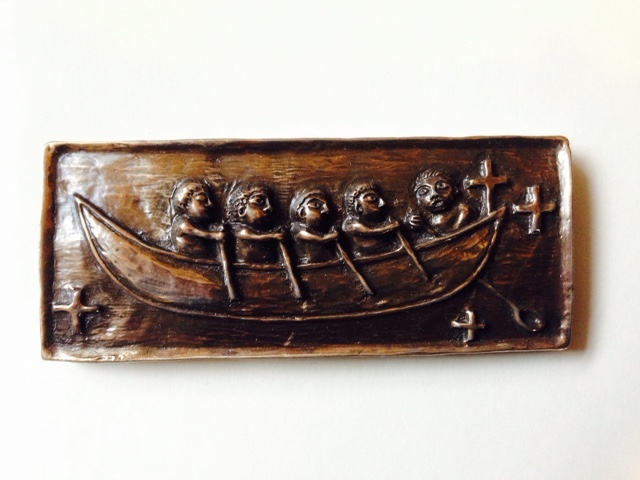
But why the boat?
Perhaps it because Luke 10 has shaped the mission life of the church down through history. Like Brendan the Navigator. Born in Ireland, 5th century. Became a monk. Served the church faithfully. Then at the age of 80 sensed God calling him to a new adventure. I’ll repeat that. At the age of 80 – always good to have something to look forward to – sensed God calling him to a new adventure with God.
Which included building a boat. With a sail. But no rudder. No way to steer. St Brendan, felt that he was called to literally trust the wind of the Spirit. Like in Luke 10 – to be sent by a sending God.
The story goes (The Voyage of Saint Brendan: The Navigator
But we’re all educated people aren’t we. We all know Christopher Columbus was the first person from Europe to land in America, not an Irish monk named Brendan. In a boat with no rudder.
Then in 1970, a man named Tim Severin, as part of National Geographic expedition set out to disprove the myth. He built a boat exactly like Brendan the Navigator. But with a radio to call for help. Set sail from Ireland. Sure enough, the winds and the tides carried him to North America, by exactly the same route and with many of the same adventures, that Brendan the Voyager wrote of. Brendan the Navigator was inspired by today’s Bible text Luke 10:1-12, to build a boat, and go on an adventures with God.
So that’s one name for your boat. Brendan’s boat.
What Brendan did was how the Celtic church understood mission. Not once, not twice, but so popular they invented a new word to describe it – peregrine – traveller, pilgrim. Robert McFarlane in his book on the history of walking (The Old Ways: A Journey on Foot
On these roads that the Celtic church did mission. Take no bag – just a boat with no rudder. Speak Peace. Looked for healing.
So that’s another name for your boat. Peregrine – pilgrim.
And then there’s the Uniting Church. To be more precise the emblem of the Uniting Church. Reading from the book with which I started, President Andrew Dutney, Introducing the Uniting Church.
The black background represents the darkened world. Upon this background the cross of Christ, the risen, crucified One. The dove with wings of flame depicts the Spirit. Beneath it all, holding it up is a … what? ….(34)
“it reminds me of a boat, with the cross as its mast and the dove’s wings as the sail.”
And no rudder. That’s Steve Taylor not Andrew Dutney.
Because, says Andrew “We are uniting, not united. We are on a journey,” a pilgrim people, “looking to the future.” So that’s perhaps that another name for your boat. You as 5 ordinards. Us as the church – that in every Council and in every ordination and in every act of ministry and in every decision, about finance and property, a Uniting Church.
A Uniting Church in Australia. In which it’s all about mission.
May the words of my mouth, and the meditation of our hearts, and the actions of the Uniting Church, be acceptable in your sight O Sending God.


 )
)